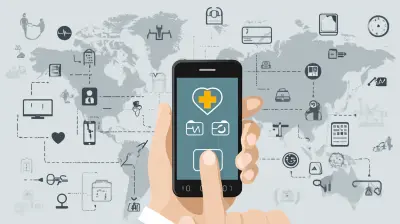
Creating Data-Driven Mobile Apps: Harnessing Big Data
9 February 2026
Mobile apps have become an essential part of our daily lives, from ordering food to tracking workouts and even managing finances. But have you ever wondered what makes some apps feel so intuitive and personalized? The secret sauce is big data.
Creating data-driven mobile apps isn't just a trend; it's a game-changer! With access to massive amounts of user data, developers can craft experiences that feel tailor-made for each individual. Let's dive into how harnessing big data can take your mobile app to the next level. 
🚀 Why Big Data Matters in Mobile Apps
Picture this: You open your favorite shopping app, and within seconds, it suggests products you’ve been eyeing. No magic involved—just smart data analysis!Big data in mobile apps is all about collecting, analyzing, and leveraging user information to improve functionality, engagement, and overall user experience. The more an app understands its users, the better it can serve them.
Here’s why big data is a big deal in mobile app development:
- Personalization: Apps can tailor content, recommendations, and notifications based on user behavior.
- Predictive Analytics: Ever wondered how Netflix suggests what to watch? Yep, that’s big data predicting your next binge session.
- Improved User Experience (UX): Smooth navigation, optimized app performance, and reduced load times all stem from data-driven insights.
- Better Decision-Making: For businesses, data-driven apps help track user trends, leading to smarter marketing and product decisions. 
🏗️ The Building Blocks of a Data-Driven Mobile App
Developing a data-driven app isn’t as simple as plugging in some analytics tools. It requires a well-thought-out strategy. Here’s what you need to focus on:1️⃣ Data Collection: Gathering the Gold
To make data-driven decisions, you first need data. Apps collect information through various channels:- User interactions: Clicks, scrolls, and time spent on pages.
- Device data: Location, operating system, screen size, and network type.
- Social media: Likes, shares, and comments reveal user preferences.
- In-app purchases: What users buy and how often they make transactions.
But remember—privacy matters! Make sure to follow data protection regulations like GDPR and CCPA and always give users control over their data.
2️⃣ Data Storage: Where Does It All Go?
Handling big data means choosing the right storage solution. Popular options include:- Cloud Storage (AWS, Google Cloud, Azure): Scalable and cost-effective.
- NoSQL Databases (MongoDB, Firebase, CouchDB): Perfect for handling unstructured data.
- Data Warehouses (Snowflake, BigQuery, Redshift): Built for heavy-duty analytics.
The key here is to balance performance, security, and cost when selecting a storage solution.
3️⃣ Data Processing: Making Sense of the Chaos
Raw data is like messy room—it needs organizing! That’s where data processing tools come in:- Apache Spark: Ideal for real-time big data processing.
- Hadoop: Great for handling large-scale data sets.
- Kafka: Works well for real-time data streaming.
These tools clean, sort, and analyze data so it can be used effectively within the app.
4️⃣ Machine Learning & AI: The Real Game Changers
Want your app to be smart? Machine learning (ML) and artificial intelligence (AI) can analyze patterns and predict user behavior.For instance:
- Spotify predicts what song you might like based on your listening history.
- Uber suggests routes based on traffic conditions.
- E-commerce apps offer personalized discounts based on shopping habits.
By incorporating ML algorithms, your app can learn and evolve over time, making it even more valuable to users. 
🔧 Key Technologies for Data-Driven Mobile Apps
You don’t have to reinvent the wheel. Plenty of powerful tools and technologies can help you build a robust data-driven app:- Google Firebase – A solid choice for real-time data storage and analytics.
- Apple CoreML – Fantastic for integrating machine learning into iOS apps.
- TensorFlow Lite – Perfect for adding AI magic to mobile applications.
- Mixpanel & Amplitude – Advanced user behavior analytics.
- Google Analytics & Flurry – Essential for tracking app engagement.
These tools help you collect, analyze, and act on data with minimal hassle. 
🎯 Best Practices for Building Data-Driven Mobile Apps
Before you dive headfirst into development, keep these best practices in mind:✅ Prioritize Data Security & Privacy
Users are rightfully concerned about their privacy. Be transparent about what data you collect and how you use it. Implement encryption, secure logins, and compliance measures to protect user information.✅ Keep It Lightweight & Fast
No one likes a slow, bloated app. Optimize data requests and use caching to reduce load times. Compress images, minimize background processes, and ensure smooth performance.✅ Use Real-Time Analytics
Real-time insights let you react instantly to user behavior. You can push relevant notifications, fix performance issues, and tweak features based on real-time feedback.✅ Test, Test, and Test Again
A data-driven app is only as good as its accuracy. Continuously test your app’s features, predictions, and recommendations to ensure they actually enhance user experience rather than frustrate users.✅ Iterate and Improve
Your app will never be perfect on day one. Use data-driven insights to tweak designs, optimize features, and improve functionality over time.🔮 The Future of Data-Driven Mobile Apps
With 5G, edge computing, and AI evolving at lightning speed, data-driven mobile apps are only going to get smarter. Imagine apps that:- Predict health risks based on fitness data.
- Automatically adjust smart home settings based on daily routines.
- Offer hyper-personalized experiences tailored to real-time moods.
The possibilities are endless! The future belongs to apps that don’t just respond to users, but anticipate their needs.
🎬 Wrapping Up
Big data isn’t just a buzzword—it’s the foundation for modern mobile apps that truly understand users. By embracing data collection, analysis, and AI-driven insights, developers can create experiences that feel effortless and intuitive.If you’re looking to build an app that stands out in today’s competitive market, harnessing big data is the way forward. So, what are you waiting for? Start leveraging data, and build something amazing!
all images in this post were generated using AI tools
Category:
App DevelopmentAuthor:

Michael Robinson
Discussion
rate this article
2 comments
Mitchell McWain
This article effectively highlights the transformative potential of big data in mobile app development. By emphasizing analytics, user behavior insights, and personalized experiences, it underscores the importance of data-driven strategies. Leveraging big data not only enhances user engagement but also drives innovation, making apps more relevant and competitive in today's market.
March 7, 2026 at 5:28 AM
Michael Robinson
Thanks for your thoughtful comment! I'm glad you found the article highlights the crucial role of big data in app development. It's exciting to see how data can drive innovation and personalization.
Nixie Franklin
Embrace data's potential, but prioritize user experience and ethical considerations equally.
February 11, 2026 at 4:21 AM
Michael Robinson
Absolutely! Balancing data's power with user experience and ethics is crucial for truly impactful mobile apps. Thank you for highlighting this important perspective!