Esports Events: How Technology is Shaping Spectator Experiences
2 June 2026
Esports isn't just a trend anymore—it's a global phenomenon. But what really keeps fans glued to their screens? It’s not just the players or the games. It’s the tech working behind the scenes that’s turning these contests into full-blown entertainment extravaganzas. From real-time stats overlays to virtual reality arenas, technology is redefining the way we watch and interact with esports events.
Let’s break down exactly how technology is making esports viewing more immersive, interactive, and, frankly, a whole lot cooler.
The Evolution of Esports Viewing
Not so long ago, watching competitive gaming meant squinting at pixelated streams with lag, low resolution, and clunky interfaces. Fast forward to now: 4K resolution, instant replays, and real-time player stats are standard. Esports has grown up—and it's taken the spectator experience along for the ride.The driving force? Innovation. The esports industry isn’t waiting for tech to catch up—it’s actively pushing the envelope.
Seamless Streaming: Where Quality Meets Speed
Let’s face it, nobody wants to watch a choppy stream. And in esports, where reaction times are measured in milliseconds, lag is a deal-breaker. That’s where Content Delivery Networks (CDNs) and adaptive bitrate streaming come in.These technologies ensure fans get buttery-smooth viewing, even on mobile. Twitch, YouTube Gaming, and Kick aren’t just platforms—they’re tech powerhouses optimizing data flow like never before.
Low latency = high engagement. When fans see it the moment it happens, it keeps the adrenaline pumping.
Real-Time Analytics and Data Overlays
Ever watched a match and wondered what a player’s APM (actions per minute) is? These days, you don’t have to Google it—it's right there on screen.Live data overlays show everything from:
- Health bars and cooldown timers
- Gold per minute
- Heat maps
- Reaction times
- Loadouts and inventory
It’s like having a coach whispering stats in your ear during the entire game. This kind of real-time insight helps both novice viewers and seasoned fans understand the plays and strategies as they unfold.
Augmented Reality (AR) and Mixed Reality (MR)
Now let’s talk about the flashy stuff. AR and MR are adding layers of visual candy to esports productions.Picture this: a Dota 2 character leaping out of the arena screen and into a digital overlay hovering above the casters. Or a League of Legends dragon flying across the stadium. It’s not fantasy anymore—it’s happening, thanks to AR tech.
With tools like Unreal Engine and Unity powering some of the most insane visuals, esports broadcasters are borrowing tricks from Hollywood to spice up the viewing experience.
These enhancements don’t just look cool—they help in storytelling. They show viewers where the action is, highlight key players, and even replay pivotal moments in 3D.
Virtual Reality (VR): Watching From Inside the Game
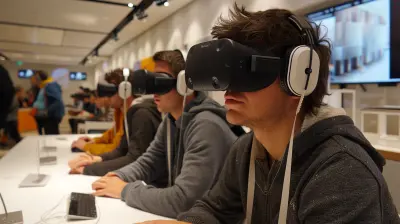
If you thought watching from the front row was prime real estate, how about being _inside_ the action?VR is flipping the script on passive viewing. Apps like Bigscreen and Oculus Venues let fans watch matches as if they’re inside the arena—or in some wild sci-fi lounge with friends from across the globe. You can switch camera angles, zoom in on players, and feel like you’re part of the game, not just a spectator.
It’s the esports version of “choose your own adventure.”
Personalized Viewing: Tailored Feeds and Multi-View Options
You know how Netflix tailors your show suggestions? Esports events are doing that too—with custom spectator modes.Platforms now offer:
- Multi-view streams (pick your own camera angles)
- Player-specific feeds (follow your favorite gamer)
- Team audio (listen in on player comms)
- Language-specific commentary
This means spectators can essentially direct their own viewing experience. Want to focus on that insane sniper who’s pulling off headshots like it’s his day job? One click—and you’re seeing every heart-stopping move live.
Interactive Chat and Fan Engagement
Remember that feeling of watching sports and yelling at your screen, even though no one can hear you? Esports solved that. Chat features on Twitch and Discord turn fans into active participants.But it doesn’t stop at emojis and hype spam. Streamers and event organizers are now incorporating:
- Polls and prediction games
- Twitch Drops (free in-game rewards)
- Live Q&A with players
- Virtual watch parties
The result? Fans don’t just _watch_ the game—they live it. They join a community, get rewarded, and actually influence the stream in real time.
AI-Powered Highlights and Match Summaries
Let’s be real—not everyone has time to watch a four-hour CS:GO match. But thanks to AI, you can still catch all the best plays.Machine learning algorithms now auto-generate highlight reels by detecting:
- High activity levels
- Crowd reactions
- In-game events (like a major kill streak or clutch win)
These AI tools deliver bite-sized content that’s perfect for social media, post-match recaps, and keeping casual viewers in the loop.
It's like your own personalized SportsCenter, but for esports.
High-End Production Value—Just Like Traditional Sports
Ever seen the ESPN broadcast of a major football game? Esports organizers have taken notes.Now, top-tier tournaments like The International or League of Legends World Championship feature:
- Multi-angle camera rigs
- Drone shots of live arenas
- Studio panels with in-depth analysis
- On-site commentators and sideline reporters
With LED stages, intro animations, and jaw-dropping set design, esports events now rival Super Bowl halftime shows. It’s theater, tech, and gaming all rolled into one spectacle.
Mobile Tech and Access Anywhere
People don’t just watch on big screens anymore. Mobile esports viewership is skyrocketing, especially in regions like Southeast Asia and South America.Thanks to powerful apps, fans can now:
- Watch live streams anywhere
- Get push notifications on game scores
- Participate in chat while watching the game
- Jump in and play spin-off mini-games during matches
It’s a “second screen” experience—except it’s also your _first_ screen now.
Blockchain and NFTs: The Future of Fan Loyalty?
Okay, we know blockchain is a buzzword, but hear us out.Some tournaments and teams are experimenting with NFTs as digital memorabilia—think of them as the trading cards of the esports world. Others use blockchain to verify fan voting, ticket sales, or support tokens for their favorite orgs.
You might eventually own a limited-edition skin or virtual trophy that commemorates a historic game-winning moment. Whether you care about NFTs or not, the tech is unlocking new ways for fans to invest (both emotionally and financially) in the esports ecosystem.
The Role of Social Media and Influencer Tech
Here’s the truth—esports is fueled by the community. And that community lives on social media.Technology powers deep integration between live events and platforms like Twitter, Instagram, TikTok, and YouTube. We’re talking:
- Live story updates
- Streamer watch-alongs
- Instant meme generation (because what’s an esports event without memes?)
- Behind-the-scenes content from influencers and pros
In short, tech helps the hype spread faster, wider, and in more creative ways. And this virality keeps fans connected, even when they’re miles apart.
Cloud Infrastructure and Scalability
Ever wonder how tens of millions of people can tune into a stream without the internet crashing?That’s the magic of cloud infrastructure. AWS, Google Cloud, and Microsoft Azure are behind the scenes, processing massive data loads, storing match footage, and handling real-time analytics.
This back-end tech ensures things run smoothly, even with insane traffic spikes during major events. Fans don’t see it—but without it, nothing works.
The Future: Holograms, Haptics, and Beyond
We’re not done yet. The future holds crazy potential for how esports will be experienced.We’re talking:
- Holographic projections (imagine players and games projected into arenas like Star Wars-style holograms)
- Haptic suits for viewers (feel the impact of in-game events)
- AI commentary (like having your own virtual shoutcaster)
- Eye-tracking and biometric feedback for pros (to enhance training and fan insight)
The gap between virtual and physical reality is shrinking—and esports is leading the charge.
Final Thoughts: It's More Than Just a Game
Esports isn't just about watching people play video games—it’s about being part of a high-tech, high-energy experience that bridges digital and real-world vibes. The spectator experience is evolving quickly, powered by some of the most exciting tech in entertainment.Whether you’re a die-hard fan, a casual viewer, or someone curious about what the fuss is all about, one thing’s clear: thanks to technology, esports is becoming one of the most engaging and thrilling types of entertainment out there.
And guess what? It's only going to get better.
all images in this post were generated using AI tools
Category:
EsportsAuthor:

Michael Robinson
Discussion
rate this article
1 comments
Selina McVicker
This article highlights how technology enhances spectator experiences at esports events. From immersive streaming to interactive features, it's exciting to see how far we've come.
June 5, 2026 at 11:53 AM