The Impact of 5G on the Esports Industry
15 December 2025
The esports industry has been growing at an astonishing pace over the past decade. From casual gamers to professional athletes, millions are tuning in to watch and compete in high-stakes tournaments. But as competitive gaming reaches new heights, a crucial technological shift is set to supercharge the scene—5G.
5G technology is more than just faster internet; it's a complete game-changer. It promises ultra-low latency, lightning-fast speeds, and unparalleled stability. But what does this mean for esports? Will it revolutionize the way we play, compete, and spectate? Let’s dive into the impact of 5G on the esports industry and why it's such a big deal. 
What Makes 5G So Special?
Before we get into the nitty-gritty of esports, let’s understand why 5G is such a massive upgrade over its predecessor, 4G.1. Ultra-Low Latency
In gaming, milliseconds make the difference between victory and defeat. With 4G networks, latency (or lag) can be frustratingly high, sometimes stretching to 30-50ms. 5G, on the other hand, can reduce latency to as low as 1ms. This means near-instant data transmission, making online matches smoother and more responsive.2. Blazing Fast Speeds
5G boasts speeds of up to 10 Gbps, which is 100 times faster than 4G. This means game downloads that used to take hours will now be done in minutes. Cloud gaming will also get a significant boost, allowing players to stream high-quality games without lag or buffering.3. Unmatched Stability
One of the biggest issues in online gaming is connection drops. With 5G's ability to handle massive amounts of data simultaneously, gamers can enjoy uninterrupted gameplay, even in crowded areas with multiple users on the network.Now that we know why 5G is such a big deal, let’s explore how it will revolutionize the esports industry. 
How 5G is Reshaping the Esports Industry
1. Revolutionizing Mobile Esports
Mobile gaming is already a massive part of the esports ecosystem. Titles like PUBG Mobile, Call of Duty Mobile, and League of Legends: Wild Rift have millions of competitive players. However, high ping, lag spikes, and slow connections have always been a hurdle.5G eliminates these barriers. With ultra-low latency and lightning-fast internet, mobile esports will reach new heights. Players will experience seamless gameplay, making mobile tournaments much more intense and competitive.
2. Enhancing Cloud Gaming
Cloud gaming has been gaining traction, with platforms like NVIDIA GeForce Now, Xbox Cloud Gaming, and Google Stadia offering console-quality games on any device. However, cloud gaming heavily relies on a stable, high-speed internet connection.With 5G, gamers can stream resource-intensive games in 4K resolution with zero lag. This opens up esports to a broader audience, removing the need for expensive gaming PCs or consoles. All that’s required is a strong 5G network and a device capable of streaming.
3. Improving Spectator Experience
Esports isn’t just about playing—it’s also a massive spectator sport. Millions of fans worldwide tune in to watch tournaments, but streaming issues, buffering, and slow load times can ruin the experience.With 5G, esports fans can watch matches in real-time with zero delays. VR and AR-enhanced spectating could also become more widespread, allowing viewers to immerse themselves in the gaming environment like never before. Imagine sitting courtside in a virtual esports arena—sounds amazing, right?
4. Enabling IoT and Smart Arenas
Traditional esports events rely heavily on wired internet connections. However, with 5G, smart arenas can become a reality.5G’s ability to connect multiple devices simultaneously means organizers can set up massive gaming events without the headache of tangled cables. Smart arenas can integrate IoT technology, offering real-time stats, interactive fan experiences, and instant replays all wirelessly.
5. Boosting Emerging Technologies: VR & AR Gaming
Virtual Reality (VR) and Augmented Reality (AR) gaming have always been plagued by one major issue—latency. If there’s even the slightest delay, the entire experience feels sluggish, and in some cases, nauseating.5G eliminates these problems, making VR and AR gaming as smooth and immersive as traditional gaming. This could give rise to new esports tournaments focused entirely on VR-based competitive gaming. 
Challenges and Potential Roadblocks
While 5G sounds like a dream come true, there are still some hurdles to overcome.1. Infrastructure and Availability
Despite its potential, 5G is still in its early stages. Setting up nationwide 5G infrastructure requires massive investment and time. In some regions, gamers may have to wait years before they can experience its full benefits.2. Device Compatibility
Not all gamers have 5G-enabled devices. While newer smartphones support 5G, older models don’t. This means players will need to upgrade their equipment, which isn't always financially feasible.3. Data Costs
High-speed connections can mean higher data consumption. While 5G offers incredible speeds, data plans may initially be expensive, leading to accessibility issues for some gamers.
Final Thoughts: A New Era of Esports
There’s no doubt that 5G is set to transform the esports industry in ways we've never seen before. From seamless mobile gaming to real-time streaming and smart arenas, the potential is limitless.As 5G technology continues to roll out worldwide, we can expect esports to grow even bigger, breaking barriers and reaching new audiences. Whether you're a professional gamer, a casual player, or a die-hard esports fan, the future is looking incredibly exciting.
So, get ready—because the next level of online gaming is just around the corner!
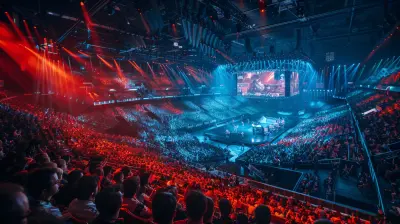
all images in this post were generated using AI tools
Category:
EsportsAuthor:

Michael Robinson
Discussion
rate this article
2 comments
Ryder Abbott
5G technology revolutionizes the esports industry by enhancing connectivity, reducing latency, and enabling real-time streaming. This improvement fosters immersive experiences, supports remote tournaments, and expands audience engagement globally.
December 30, 2025 at 1:35 PM
Michael Robinson
Thank you for your insights! Indeed, 5G is set to transform esports by enhancing connectivity and creating more immersive experiences for players and fans alike.
Lana Brown
5G is a game-changer for esports, enhancing connectivity, reducing latency, and enabling more immersive experiences. It's not just an upgrade; it's a leap towards a more dynamic gaming future.
December 15, 2025 at 5:55 AM
Michael Robinson
Absolutely! 5G is revolutionizing esports by providing unparalleled connectivity and responsiveness, paving the way for more immersive and dynamic gaming experiences.