The Intersection of Virtual Reality and Augmented Reality: Blurring the Lines
16 January 2026
Alright, tech-heads and screen-staring addicts — get ready to be wooed, wowed, and possibly whiplashed. Because we're diving headfirst into a mind-melting mashup of two of the most buzzwordy buzzwords in tech: Virtual Reality (VR) and Augmented Reality (AR). They’ve been doing their own thing for years like weird cousins at a family reunion, but now? Oh, they’re teaming up. And guess what? The line separating them is as blurred as your vision after a 12-hour VR gaming binge.
Let’s talk about the beautiful chaos that happens when VR and AR collide.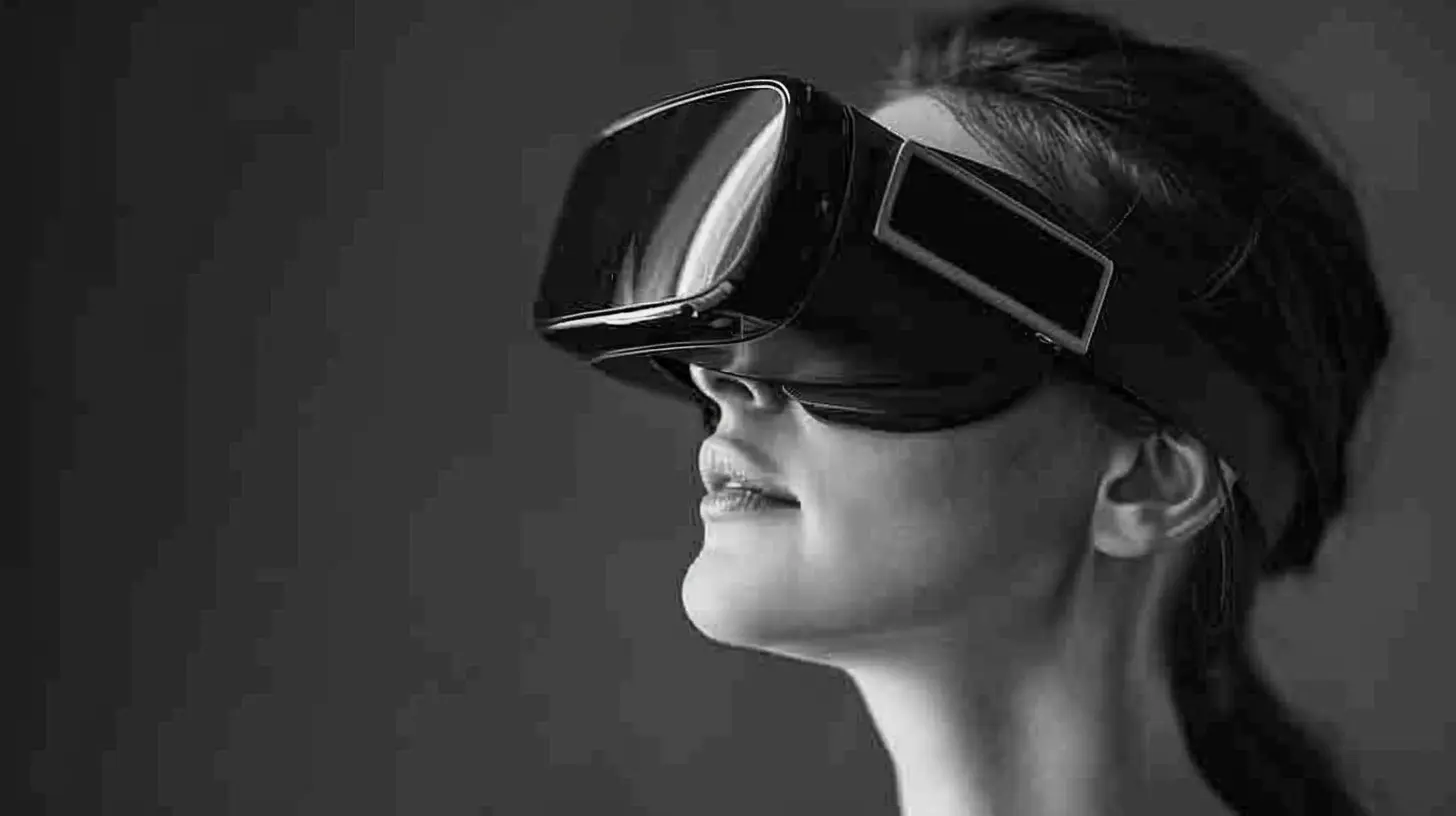
So, What Are We Even Talking About?
Let’s break it down like you’re five — or just severely sleep-deprived (we don’t judge).- Virtual Reality: It takes you out of the real world. Think of it as a teleportation device for your eyeballs. You strap on a headset and suddenly you’re dodging bullets in a digital warzone or painting in 3D with some imaginary brush. Total immersion. You’re outta here, Earth.
- Augmented Reality: This one's more like a digital paint job on top of the real world. Snapchat filters? AR. Pokémon GO? Yep, that too. You're still in your living room, but look — there’s a Pikachu chilling on your couch. Magic? No. It’s pixels, baby.
Now, get ready for the spicy part.
Two Worlds Collide — And We’re Here for the Show
AR and VR used to hang out in different corners of the tech playground. VR was the nerdy loner who needed a headset and a lot of power to run. AR was the cool kid on your mobile phone — accessible, breezy, and usually used to turn your face into a cat. But now? They're fusing into one surreal techno-smoothie.Ever heard of XR? Mixed Reality? Spatial Computing? Welcome to the awkwardly-named party. These are the love children of VR and AR — blurring the lines between “What’s real?” and “What app is glitching out now?”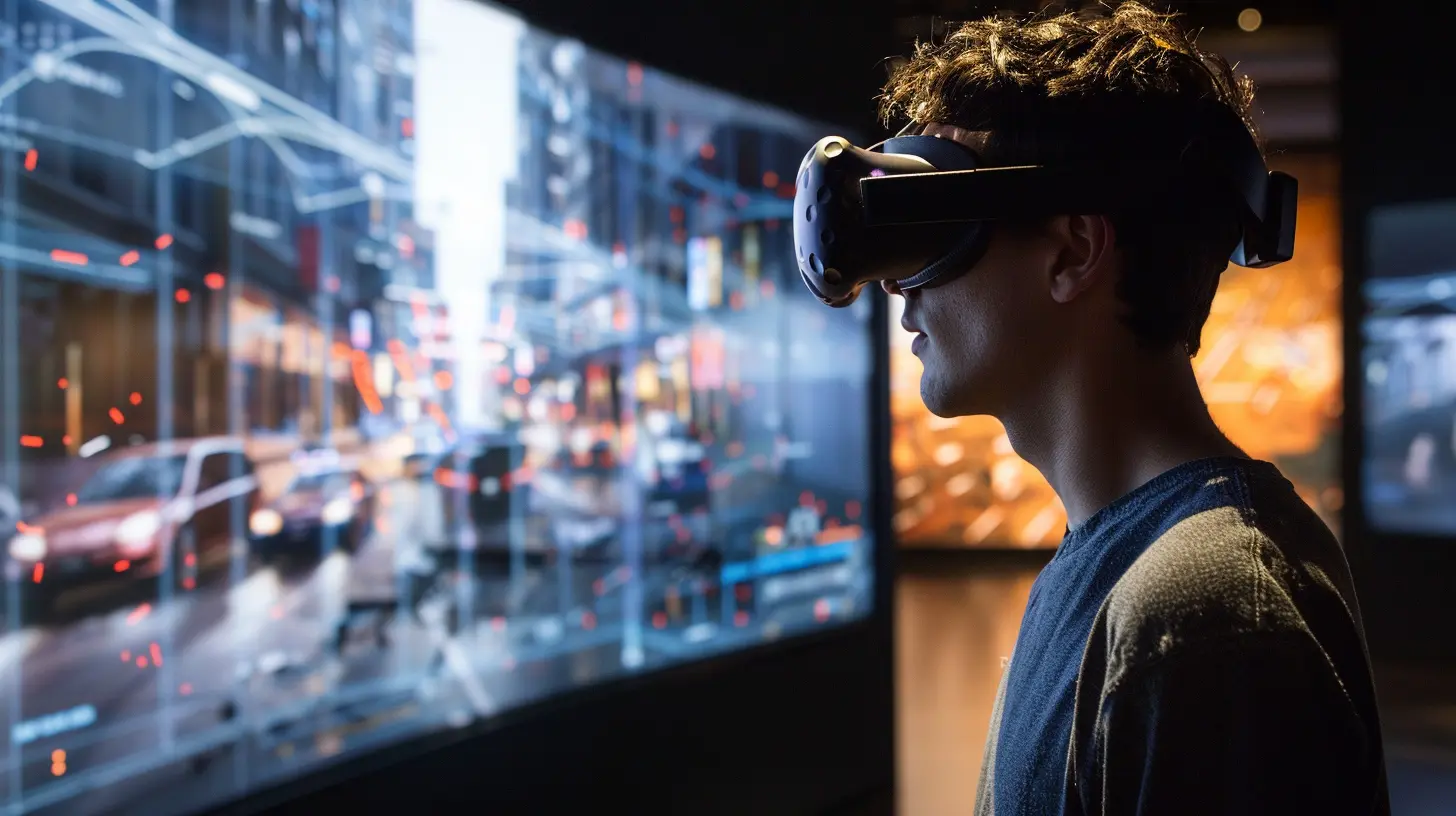
Why Is This Happening Now?
Short answer: Tech finally caught up with our sci-fi delusions.Long answer? We now have:
- Better hardware (finally, VR headsets that don’t make you feel like Robocop's clumsy cousin)
- Faster processing power (thank you, Apple M-series and Qualcomm Snapdragon)
- Wider developer support (Unity, Unreal Engine — those folks are doing the most)
- Consumer demand (aka, people buying more gadgets they don’t need)
The result? VR can see what’s real. AR can now act like it lives in fantasy land. And together, they give us experiences that are part real, part digital, and fully trippy.
The Rise of Mixed Reality: Where Things Get Weird
Mixed Reality (MR) sits at the intersection of VR and AR like that one friend who can hang out with both the geeks and the jocks. In MR, digital objects don’t just sit on top of the real world — they interact with it. Like, your virtual cat can walk behind your real-life sofa and pop out the other side. It’s not just an overlay. It’s layers, depth, and downright digital sorcery.Devices leading the way?
- Microsoft HoloLens: Basically Iron Man’s HUD but IRL.
- Meta Quest 3: Because Zuck won’t rest until we all live on MetaIsland™.
- Apple Vision Pro: Cupertino’s $3,499 answer to “Hey, what if computers, but face?”
We’re not in Kansas anymore, folks. We’re in Kansas, but like — 3D rendered Kansas with dragons and holograms.
Real World Use-Cases That Aren’t Just for Showing Off at Tech Conferences
Sure, VR and AR are great for flailing your arms in Resident Evil or pretending to be a virtual painter. But let’s give them some grown-up responsibilities.🏥 Healthcare
Surgeons are using AR overlays during complex procedures. VR simulations are training med students without, you know, killing anyone. That's a win.🏗 Architecture & Design
Walk through a building before it’s built? Check. Want to see what your living room looks like with neon green furniture? AR's got your back.🎓 Education
Forget boring PowerPoints. VR lets students stand on the moon, travel back to Ancient Rome, or explore the human body like a microscopic tourist. Biology just got way cooler.🛒 Retail
Try on clothes, makeup, or even furniture in your space — without the commitment or awkward fitting room lighting. IKEA’s AR app is basically your interior design BFF now.👨💻 Workplace Collaboration
Why sit through another soul-crushing Zoom when you can huddle in a virtual office and throw digital sticky notes around like a caffeinated squirrel? Remote work, but make it sci-fi.The Pros and Cons of This Digital Cocktail
Of course, with every tech revolution comes a pile of hype, hope, and healthy skepticism. Let’s break it down.✅ Pros
- Immersive experiences: Goodbye boring. Hello wild 360° worlds.- Next-level interaction: You’re not just looking, you’re doing.
- Remote capabilities: Work, play, learn — from anywhere.
- Enhanced creativity: If you can dream it, you can simulate it.
❌ Cons
- Hardware headaches: Bulky headsets and short battery lives. Ugh.- Motion sickness: Not everyone wants to puke in 4K.
- Privacy concerns: Great, now even your eyeballs are being tracked.
- High cost: Because apparently, immersive dreams come with immersive price tags.
So yeah, it’s not all holographic rainbows. But it’s getting there.
Will This Tech Ever Replace Reality?
Look, unless we want to go full "Matrix meets Black Mirror" (which, honestly, some tech bros would love), it’s safe to say that AR and VR won’t completely replace reality — but they’re definitely rewriting the user manual.In fact, we’re entering a world where who needs real-life vacation when you can chill on a digital beach with AI flamingos under a simulated sun, right from your couch? Sad? Kinda. Awesome? Absolutely.
Future Trends: What's Coming Down the (Virtual) Pipe?
Let’s put on our sci-fi goggles and peek into the crystal ball. Here’s what’s likely on the horizon:1. Lighter, Smarter Wearables
Forget bulky ski-goggles. We’re heading toward sleek smart glasses that make you look less like RoboCop and more like an off-duty Marvel superhero.2. AI-Powered Everything
AI’s getting cozy with AR and VR — customizing experiences, creating smarter virtual assistants, and delivering digital content before you even ask for it. Creepy? Maybe. Convenient? Oh yes.3. Persistent AR Worlds
Think of AR layers that stay even when you close the app. Leave a virtual post-it note on your fridge and it’s still there tomorrow. Basically, the real world gets a full-time digital sidekick.4. Cross-Reality Social Platforms
Zoom who? The future of social interaction might live in blended VR/AR spaces where your avatar drinks digital coffee with your friend’s hologram at a virtual café.Final Thoughts: Are We Living in the Future Yet?
Short answer? Kind of.The intersection of Virtual Reality and Augmented Reality is a fascinating, confusing, and slightly ridiculous place to be — but it’s also where the magic is happening. One minute you're in your kitchen, the next you're slicing fruit in a virtual dojo while racing a holographic unicorn.
We’re not saying reality’s getting replaced — but it’s definitely getting a software update.
And if you’re still wondering, “Why does it matter?” Just remember this: the next time someone sends you a holographic puppy, thank the glorious chaos of VR and AR working together. And maybe… just maybe… don’t take reality so seriously.
TL;DR (Because Let’s Be Real)
- VR takes you out of the real world.- AR layers digital stuff onto the real world.
- Together, they’re fusing into something insane.
- Mixed Reality makes digital and real stuff interact in freaky ways.
- Real-life uses: healthcare, design, education, shopping, remote work — not just gaming!
- There are pros (immersion) and cons (nausea, price).
- The future is more lightweight, AI-infused, and socially virtual.
So go ahead, strap on your headset, fire up your AR app, and prepare to exist in 12 realities at once.
Because reality is so last season.
all images in this post were generated using AI tools
Category:
Virtual RealityAuthor:

Michael Robinson
Discussion
rate this article
2 comments
Candace Holland
This article effectively highlights how VR and AR are converging, reshaping our digital experiences and interactions.
February 14, 2026 at 3:46 AM
Michael Robinson
Thank you for your insights! I'm glad you found the article highlights the convergence of VR and AR in reshaping our digital experiences.
Ivan McIlroy
Is this a virtual reality or augmented reality? Who knows anymore! At this point, I just hope my coffee is real!
January 28, 2026 at 4:50 AM
Michael Robinson
Great point! The blending of VR and AR can be confusing, but at least we can count on our coffee to be real!