Are Our Memories Shifting in the Digital Era?
October 24, 2025 - 14:31

In an age where smartphones are ubiquitous, the sheer volume of photographs stored on devices raises intriguing questions about memory. With an estimated 20,000 images residing on the average person's phone, researchers are delving into how this digital overload affects our ability to recall personal experiences.
The convenience of capturing moments at a moment's notice has transformed the way we document our lives. Yet, experts suggest that this abundance may be altering our cognitive processes. Instead of relying on mental recollections, individuals may find themselves depending more on visual aids stored digitally.
This shift could lead to a superficial engagement with our memories, as the act of taking a photograph often replaces the deeper cognitive processing that occurs when we mentally reflect on an experience. As we navigate this new landscape, understanding the implications of digital imaging on our autobiographical memory becomes increasingly vital. Researchers continue to explore whether these changes enhance or hinder our ability to remember the past.
MORE NEWS

August 20, 2026 - 18:18
Opinion: Technology isn't the hard part anymoreFor years, the conventional wisdom in the telecom industry was that the biggest hurdle to connecting rural America was the technology itself. Laying fiber across vast, sparsely populated terrain,...
August 20, 2026 - 03:19
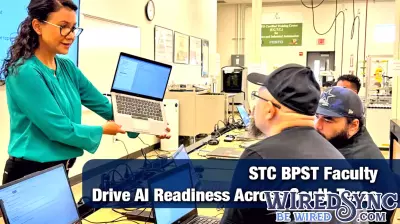
STC’s Business, Public Safety and Technology Faculty Mobilize to Prepare Students for an AI-Driven FutureFaculty across South Texas College`s Division of Business, Public Safety and Technology are joining forces to make sure students do not get left behind as artificial intelligence reshapes the...

August 19, 2026 - 04:25
Integrating Technology in the Classroom Must Be Handled With Caution and PragmatismSchool systems across the country are moving forward with digital learning tools, but the push to modernize classrooms is meeting a wave of caution from educators and administrators. At the 2026...

August 18, 2026 - 09:22
OMSI hosts Portland Festival of Cinema, Animation & Technology this weekA week-long showcase of independent filmmaking and digital innovation kicks off this summer at the Oregon Museum of Science and Industry. The Portland Festival of Cinema, Animation and Technology...