Breakthrough in Diamond Fabrication Technology Promises New Applications
January 1, 2025 - 18:37

Researchers at HKU have unveiled a groundbreaking method for the rapid and scalable production of ultrathin diamond membranes. This innovative approach addresses long-standing challenges in traditional diamond fabrication, paving the way for a multitude of applications across various fields, including electronics, photonics, and quantum devices.
Diamonds are renowned for their exceptional thermal conductivity, electrical insulation, and optical transparency, making them ideal candidates for advanced technological applications. The newly developed technique allows for the efficient creation of diamond membranes that are not only ultrathin but also possess remarkable structural integrity.
The implications of this research are significant, as it opens the door to the development of next-generation devices that could revolutionize industries. From enhancing the performance of electronic components to improving the efficiency of photonic systems, the potential applications are vast. As researchers continue to explore the capabilities of these ultrathin diamond membranes, the future of technology looks increasingly promising.
MORE NEWS

August 20, 2026 - 18:18
Opinion: Technology isn't the hard part anymoreFor years, the conventional wisdom in the telecom industry was that the biggest hurdle to connecting rural America was the technology itself. Laying fiber across vast, sparsely populated terrain,...
August 20, 2026 - 03:19
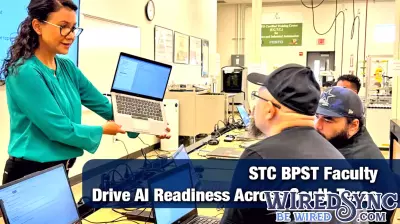
STC’s Business, Public Safety and Technology Faculty Mobilize to Prepare Students for an AI-Driven FutureFaculty across South Texas College`s Division of Business, Public Safety and Technology are joining forces to make sure students do not get left behind as artificial intelligence reshapes the...

August 19, 2026 - 04:25
Integrating Technology in the Classroom Must Be Handled With Caution and PragmatismSchool systems across the country are moving forward with digital learning tools, but the push to modernize classrooms is meeting a wave of caution from educators and administrators. At the 2026...

August 18, 2026 - 09:22
OMSI hosts Portland Festival of Cinema, Animation & Technology this weekA week-long showcase of independent filmmaking and digital innovation kicks off this summer at the Oregon Museum of Science and Industry. The Portland Festival of Cinema, Animation and Technology...