Little Rock Ends Contract for Gunshot Detection Technology
February 5, 2025 - 04:57

In a significant decision, the Little Rock City Board has opted not to renew its contract with the company behind ShotSpotter, a controversial gunshot detection technology utilized by local law enforcement. This move comes amid ongoing debates about the effectiveness and implications of such surveillance tools in urban areas.
ShotSpotter, which uses a network of sensors to detect and locate gunfire, has been a focal point in discussions regarding public safety and police practices. Proponents argue that the technology aids in rapid response to gun violence, potentially saving lives. However, critics have raised concerns about its accuracy, the potential for misuse, and the broader implications for community trust in law enforcement.
The decision to discontinue funding reflects a growing scrutiny of policing methods and a shift towards exploring alternative strategies for addressing gun violence. As cities nationwide reassess their approaches to public safety, Little Rock's choice may signal a broader trend in how communities engage with technology in policing.
MORE NEWS

August 20, 2026 - 18:18
Opinion: Technology isn't the hard part anymoreFor years, the conventional wisdom in the telecom industry was that the biggest hurdle to connecting rural America was the technology itself. Laying fiber across vast, sparsely populated terrain,...
August 20, 2026 - 03:19
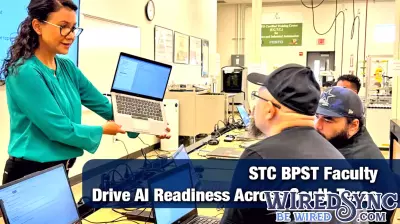
STC’s Business, Public Safety and Technology Faculty Mobilize to Prepare Students for an AI-Driven FutureFaculty across South Texas College`s Division of Business, Public Safety and Technology are joining forces to make sure students do not get left behind as artificial intelligence reshapes the...

August 19, 2026 - 04:25
Integrating Technology in the Classroom Must Be Handled With Caution and PragmatismSchool systems across the country are moving forward with digital learning tools, but the push to modernize classrooms is meeting a wave of caution from educators and administrators. At the 2026...

August 18, 2026 - 09:22
OMSI hosts Portland Festival of Cinema, Animation & Technology this weekA week-long showcase of independent filmmaking and digital innovation kicks off this summer at the Oregon Museum of Science and Industry. The Portland Festival of Cinema, Animation and Technology...