Big Data and the Future of Autonomous Vehicles
2 January 2026
Imagine driving down the highway, sipping your coffee, reading the news, or just enjoying the view — all without touching the steering wheel. Sounds like science fiction, right? But thanks to big data and some serious brainpower in the tech world, this kind of future is fast becoming our reality. Self-driving cars, or autonomous vehicles (AVs), are no longer just a wild tech dream. They’re real, they’re evolving, and believe it or not, big data is in the driver’s seat.
Let’s buckle up and take a joyride into the world of big data and how it's steering the future of autonomous vehicles.
What Exactly Is Big Data?
Before we dive into the fast lane, let's get our basics clear. Big data isn’t just a trendy buzzword.Simply put, big data refers to incredibly large sets of information that are collected from various sources at lightning speed. This data is so massive and complex that traditional data processing software just can’t handle it. We’re talking about data that comes from GPS, cameras, radar sensors, social media, IoT devices, and more.
Big data is often broken down into the 5 V’s:
- Volume – The sheer amount of data.
- Velocity – The speed at which data is generated and processed.
- Variety – The different formats (text, images, video, etc.).
- Veracity – The accuracy and reliability of the data.
- Value – The usefulness of the data in decision-making.
Now, mix that with artificial intelligence, machine learning, and a sprinkle of real-time analytics — and you’ve got the secret sauce behind autonomous vehicles.
How Autonomous Vehicles Work (A Quick Primer)
Before we zoom into how big data fits in, it’s worth understanding how autonomous vehicles actually work.Autonomous vehicles use a combination of:
- Cameras – To "see" traffic signals, pedestrians, and lane markings.
- Radar and LiDAR – These sensors map out 3D surroundings for object detection.
- GPS – For navigation and pinpointing the car’s location.
- Onboard Computers & AI – To process all this data and make split-second decisions.
But here's the catch: for these smart systems to work properly, they need a constant stream of clean, real-time, high-quality data. You guessed it—big data steps in right here.
Big Data: The Fuel of the Autonomous Revolution
If data were fuel, then big data is premium-grade rocket fuel for autonomous vehicles. Here’s how it helps:1. Real-Time Decision Making
Autonomous vehicles need to make decisions in microseconds. Big data provides the insights needed from hundreds of data points — whether it’s recognizing a stop sign, identifying a pedestrian about to cross the road, or avoiding a pothole.For instance, when an AV approaches a busy intersection, it processes data from its surroundings (vehicles, people, traffic lights, etc.). Big data analytics kicks in to determine the safest maneuver. Without scalable data pipelines and real-time processing? Crash-course chaos.
2. Route Optimization and Traffic Predictions
Ever used Google Maps and gotten real-time updates? That’s big data at work!Now imagine this on steroids for autonomous cars. AVs need to know the best, fastest, and safest routes. Big data digs into historical traffic data, weather forecasts, live road conditions, and even accident reports to help AVs pick optimal paths. No more sitting in bumper-to-bumper traffic!
3. Training Autonomous Vehicle Algorithms
AI and machine learning algorithms don’t just pop out perfect.They need boatloads of data to learn from — like thousands of hours of driving videos, street scenarios, and edge cases (think a cat darting across the road). Big data doesn’t just train; it refines and enhances these algorithms over time, making AVs smarter with every mile.
4. Predictive Maintenance
Ever wondered how AVs stay in top shape without a human driver checking engine lights?Big data helps predict when parts might fail — before they actually do. It monitors things like engine performance, tire pressure, battery life, and more. This form of predictive maintenance keeps cars safe and reduces downtime. Think of it as your car whispering, “Hey, my brakes need a check-up.”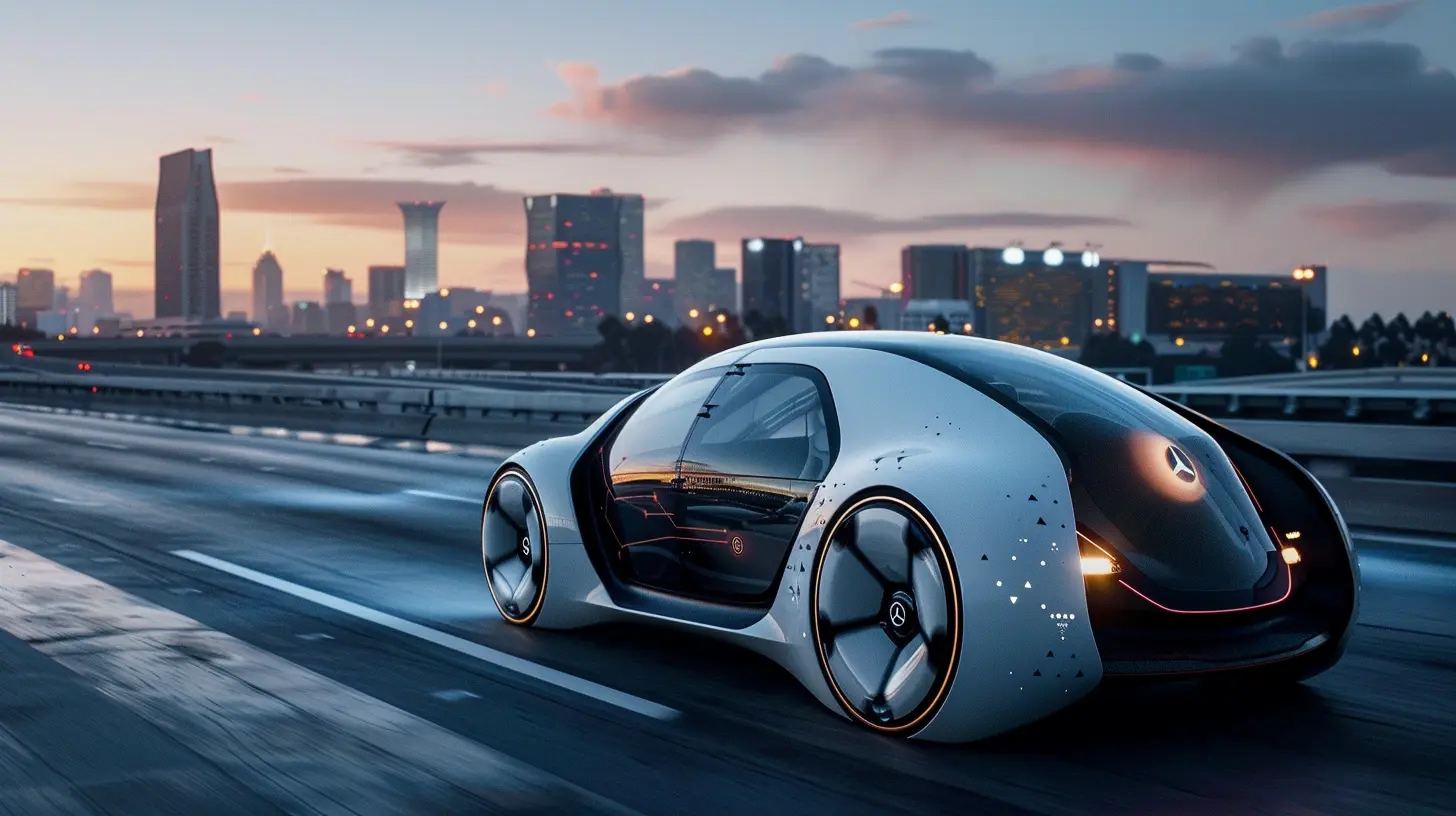
Data Sources That Feed the AV Beast
Where does all this juicy data come from? A lot of places, actually.- Vehicle sensors – Cameras, LiDAR, ultrasonic sensors.
- Environmental sensors – Weather, road conditions.
- Satellite and GPS data – Location mapping.
- Traffic management systems – Real-time traffic flow.
- Smart infrastructure – Smart lights and road signals.
- Crowdsourced data – Other vehicles and user data.
The more data an AV gets, the more “aware” it becomes. It’s like giving it a sixth sense, allowing it to anticipate problems and react accordingly.
Challenges of Big Data in Autonomous Vehicles
Of course, nothing this groundbreaking comes without its road bumps. Here are some of the major challenges:1. Data Privacy and Security
More data means more vulnerability to breaches. Who owns the data your car collects? How is it protected? These are crucial questions that need solid answers, especially when personal location and behavior data are involved.2. Storage and Processing Power
AVs generate about 1–2 terabytes of data per day. Storing and analyzing this ocean of information is a mammoth task. Companies need enormous cloud infrastructure and edge computing to process data on the go.3. Data Accuracy
Even the smartest AI can make a poor decision if it’s fed inaccurate or outdated data. Ensuring high-quality, real-time information is key. Garbage in, garbage out — that rule still holds.4. Standardization
Different car manufacturers and systems collect data in various formats. Creating universal data protocols will be essential for shared learning and vehicle-to-vehicle (V2V) communication.The Role of Machine Learning and AI
Artificial Intelligence is the brain, big data is the memory, and machine learning is the experience of autonomous vehicles.Here’s how machine learning teams up with big data:
- Pattern Recognition – Learning from past driving patterns for better decision-making.
- Object Classification – Identifying whether an object is a vehicle, human, or trash can.
- Anomaly Detection – Spotting unusual events like a car driving the wrong way.
- Behavior Prediction – Anticipating what nearby cars or pedestrians will do next.
By constantly ingesting and analyzing data, AVs can rewire their digital brains. It’s like upgrading your IQ every day on the job.
The Role of the Cloud and Edge Computing
You can’t talk about big data without mentioning cloud and edge computing — the dynamic duo.- Cloud Computing: Stores and processes huge volumes of past data. Useful for training AI models.
- Edge Computing: Processes data locally in the car or nearby devices. Crucial for real-time decision-making.
Think of it like a school: the cloud is your library, and the edge is your classroom. You learn from the library, but you do your real-time problem-solving in the classroom!
Real-World Companies Driving the Data Revolution
Let’s name-drop a few tech titans and AV pioneers leveraging big data like pros:- Tesla – Uses fleet learning and OTA (over-the-air) updates from millions of cars.
- Waymo – Collects petabytes of data from complex urban driving environments.
- Uber ATG (Advanced Technologies Group) – Develops AVs backed by traffic and ride data.
- NVIDIA – Powers AVs with data-driven AI chips and simulation engines.
- Mobileye – Uses crowd-sourced map data for enhanced driver-assistance systems.
Whether it’s software, hardware, or mapping — big data is the binding thread.
The Road Ahead: What's Next for Big Data and AVs?
We’re truly just at the beginning. As big data becomes faster, smarter, and more refined, autonomous vehicles will evolve beyond basic self-driving. Here's a glimpse at what’s coming:- Fully Connected Networks: Cars won't just drive themselves; they’ll talk to each other and to smart infrastructures — traffic lights, crosswalks, even your smart home.
- Smarter Cities: Data from AVs will help city planners reduce congestion, lower pollution, and build better roads.
- Shared AV Fleets: Think Uber or Lyft, but driverless. And every bit of that will be run on — you got it — big data.
- Personalized Driving Experience: Your car might know your schedule, music taste, and even mood. All thanks to behavioral analytics.
Final Thoughts
The marriage between big data and autonomous vehicles is like peanut butter and jelly — perfectly complementary, and together they’re changing the game.Big data doesn’t just guide autonomous vehicles; it empowers them. With more data, these vehicles get smarter, safer, and more efficient. We’re heading toward a world where travel is seamless, traffic accidents are rare, and commuting becomes a time to relax, all because our cars have become data-driven supercomputers on wheels.
So next time you hear someone say, “Data is the new oil,” don’t roll your eyes. In the world of autonomous vehicles, that statement couldn’t be more spot-on.
all images in this post were generated using AI tools
Category:
Big DataAuthor:

Michael Robinson
Discussion
rate this article
2 comments
Ella Barnes
Imagine a world where data whispers secrets to cars. What unseen forces guide their choices? The journey has just begun.
February 4, 2026 at 1:57 PM
Michael Robinson
Indeed, as data continues to evolve, it will shape the decision-making processes of autonomous vehicles, revealing insights we haven't yet imagined. The future holds exciting possibilities!
Dakota McCartney
This article effectively highlights the crucial role of big data in shaping the future of autonomous vehicles. It presents a balanced view of the potential benefits and challenges, emphasizing the need for robust data management and ethical considerations as technology continues to evolve.
January 7, 2026 at 4:33 AM
Michael Robinson
Thank you for your insightful comment! I'm glad you found the article informative and balanced. Addressing both benefits and challenges is indeed vital as we navigate the future of autonomous vehicles.