How AI Will Transform Business Operations by 2026
17 April 2026
Let’s be honest for a second. When you hear “AI in business,” what comes to mind? Is it a vague, futuristic notion of robots in suits, or a slightly ominous feeling that your job might be on the line? I get it. The hype is deafening, and the promises can sound like science fiction. But here’s the thing: the transformation isn’t a distant thunderstorm on the horizon. It’s already drizzling, and by 2026, it’s going to be a downpour reshaping the very landscape of how companies operate.
This isn’t about replacing humans with cold, calculating machines. Think of it more like giving every single employee, department, and process a super-powered co-pilot. By 2026, AI will have moved from being a shiny tool in the IT department’s toolbox to the very foundation of business operations—the central nervous system that makes everything faster, smarter, and more intuitive. Let’s pull back the curtain on what this honest, messy, and profoundly impactful shift is really going to look like.
From Reactive to Proactive: The Dawn of Anticipatory Operations
Today, most business software is glorified record-keeping. It tells you what already happened. Your sales dipped last quarter. A machine on the factory floor broke down. A key employee resigned. You’re stuck in a cycle of reacting, firefighting, and playing catch-up.By 2026, AI will flip this script entirely. We’re moving into the era of anticipatory operations.
The Crystal Ball of Predictive Analytics
Imagine your supply chain software not just tracking shipments, but predicting a typhoon in the South China Sea 10 weeks out, calculating the ripple effect on component prices and shipping lanes, and automatically rerouting orders and adjusting inventory buffers—all before the storm even forms. That’s not magic; it’s AI cross-referencing historical data, real-time weather models, geopolitical news, and port congestion reports. It’s moving from “just-in-time” to “just-in-case, and we knew about it months ago.”Your HR platform won’t just process resignations. It will analyze patterns in communication, workload, project engagement, and even subtle changes in calendar scheduling to flag a potential flight risk with 85% accuracy, prompting a manager to have a retention-focused conversation. It’s moving from exit interviews to “stay” interviews, facilitated by data.
This predictive layer will be the most significant operational shift. We’ll stop asking “What happened?” and start asking “What’s about to happen, and what’s the best action to take right now?” The business that can see around corners wins.

The End of Generic: Hyper-Personalization at Scale
We’ve all been victims of bad personalization. You buy a coffee maker online and are bombarded with ads for coffee makers for months. It’s clumsy. By 2026, AI will enable a level of personalization so seamless it feels less like marketing and more like a thoughtful conversation.For Customers: A Tailor-Made Journey
AI will unify every touchpoint—website, app, customer service chat, email, social media—into a single, evolving profile. This won’t just be “Sarah likes hiking.” It will be: “Based on her browsing history, purchase patterns, and recent support ticket about a torn rain jacket, Sarah is likely planning a challenging, wet-weather hike in the next 30 days. She values durability, lightweight materials, and ethical manufacturing.”The result? When she visits your site, it dynamically showcases your most durable, waterproof gear from brands with strong sustainability credentials. The promotional email she gets isn’t a generic blast; it’s a curated guide to wet-weather hiking preparedness, featuring the exact jacket she was looking at and complementary items. The customer service agent, armed with this AI-driven insight, can proactively address her needs. It’s not creepy; it’s competent. It turns transactions into relationships.
For Employees: The Personalized Workplace
This hyper-personalization will extend internally. Your company’s learning platform won’t offer a generic “Leadership 101” course to everyone. It will analyze your projects, your communication style in meetings (via anonymized transcript analysis), your career goals, and skill gaps to serve you a unique learning path: “Here’s a 15-minute module on conflict resolution for technical teams, based on the challenges you faced in the Q3 project debrief.”Workflows themselves will adapt. An AI assistant will learn that you’re most creative in the mornings and schedule your deep-work blocks then, while stacking your administrative tasks for the post-lunch slump. It will prepare your daily briefing not as a static report, but as an interactive summary focused on the three metrics you care about most, with pre-drafted responses to common queries. The tool molds to the human, not the other way around.
The Great Democratization: AI as Every Employee’s Co-Pilot
The biggest mistake is thinking AI is only for data scientists and tech giants. By 2026, the most profound change will be the democratization of expertise. Sophisticated AI capabilities will be embedded into the tools every knowledge worker uses daily.No-Code/Low-Code AI Integration
The marketer will use a no-code AI tool to analyze a year’s worth of campaign data and predict the optimal channel mix and messaging for a new product launch—without writing a single line of Python. The financial analyst will converse with their spreadsheet, asking in plain English, “Show me the three biggest cost anomalies in our European logistics data from last year and hypothesize why they occurred.” The AI will clean the data, run the analysis, and present visual findings.This is like giving every employee a team of expert analysts, copywriters, and strategists on tap. It elevates the baseline of what’s possible. The barrier to strategic insight crumbles. People spend less time preparing to do their jobs (digging for data, building reports, formatting decks) and more time actually doing them—making decisions, crafting strategy, and building relationships.
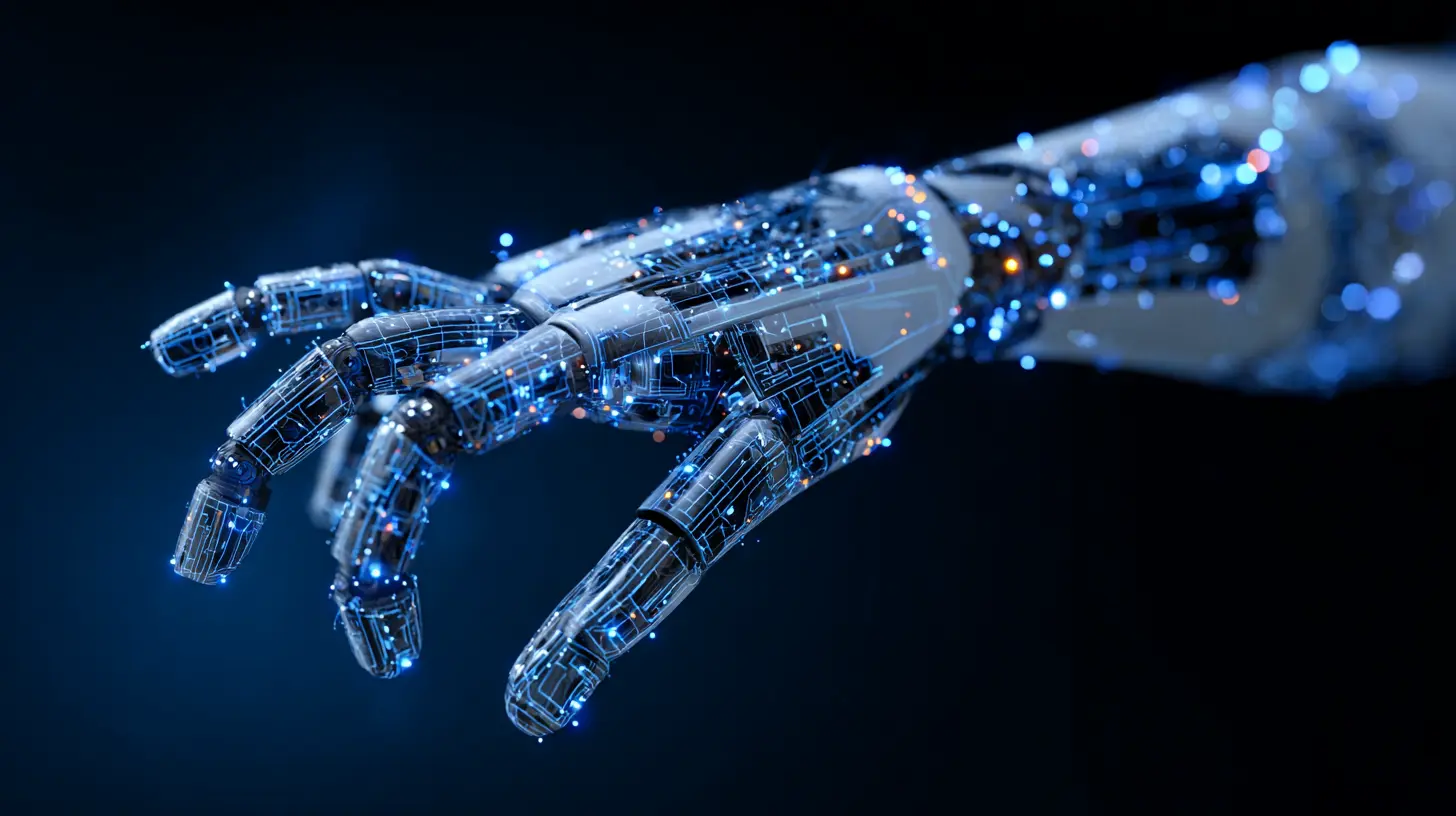
The Symphony of Siloed Systems: AI as the Ultimate Integrator
Let’s face it: our business tech stacks are a mess. We have a CRM that doesn’t talk to the ERP, which fights with the marketing automation platform. Data lives in isolated islands, and employees waste countless hours playing digital ferryman, moving information from one system to another.By 2026, AI will act as the universal translator and conductor for this chaotic orchestra. AI-powered middleware and integration platforms won’t just move data; they will understand the context of the data and enable intelligent workflows across systems.
Here’s a simple example: A customer’s payment fails in the finance system (ERP). Today, that might trigger an automated email from finance and… that’s it. In 2026, the AI integrator will see this event, understand this is a high-value client, cross-reference the CRM to see they have an open support ticket about a product feature, and automatically create a tailored action plan. It could: 1) Alert the account manager with a suggested script, 2) Temporarily extend service to avoid disruption while the payment issue is resolved, and 3) Schedule a check-in from support after the payment is fixed. It connects the dots between finance, sales, and support to preserve the relationship.
This breaks down operational silos not through a painful, monolithic software implementation, but through a layer of intelligence that sits above everything, making the whole system greater than the sum of its parts.
The Human-AI Partnership: Redefining Roles, Not Replacing Them
This is the heart of the matter, and where the most honest reflection is needed. Yes, some repetitive, rules-based tasks will be fully automated. But the real story is augmentation. AI will take the “work” out of paperwork, freeing humans to do what we do best: think critically, empathize, create, and strategize.A salesperson will spend less time manually updating the CRM and crafting prospecting emails. Their AI co-pilot will do that. They will spend more time understanding complex client needs, navigating nuanced negotiations, and building trust. A factory technician will spend less time on routine diagnostics. Their AR glasses, powered by AI, will highlight the faulty component and overlay the repair manual. They will spend more time on complex overhauls and process optimization. A doctor will spend less time on administrative notes. Their AI scribe will transcribe and structure the patient visit. The doctor will spend more time on complex diagnosis and empathetic patient care.
The job title of the future might be “AI Manager” or “Human-Machine Interface Specialist.” Our value will shift from execution to oversight, judgment, and ethical application. The most sought-after skills will be critical thinking, creativity, emotional intelligence, and the ability to ask the right questions of our AI partners.
The Invisible Backbone: AI in Security, Compliance, and Ethics
By 2026, AI’s most crucial role might be one we rarely see: protecting the business. Cybersecurity will be an AI-vs-AI battleground, with defensive algorithms constantly learning and adapting to neutralize threats in real-time. AI will also be the guardian of compliance, automatically scanning contracts, communications, and processes to flag potential regulatory issues—a non-negotiable in a world of increasing data privacy laws.And this brings us to the most important reflection point: ethics and bias. The AI that transforms our operations is only as good as the data it’s fed and the objectives it’s given. By 2026, businesses won’t have a choice but to build “Ethical AI by Design.” This means transparent algorithms, continuous bias auditing, and human oversight for high-stakes decisions. The companies that win trust will be those that operationalize AI ethics as rigorously as they operationalize sales targets.
Conclusion: The Stakes Have Never Been Higher
So, where does this leave us as we look toward 2026? The transformation isn’t a question of if, but how and how well. The gap won’t be between companies that use AI and those that don’t; it will be a chasm between companies that use AI thoughtfully and those that don’t.Business operations will become fluid, intelligent, and astonishingly responsive. The winners will be those who see AI not as a cost-cutting axe, but as a capability amplifier. They will invest in the technology and the culture to support it—training their people, establishing ethical guardrails, and fostering a mindset of human-AI collaboration.
The next two years are our runway. The time to experiment, to learn, to build the foundations, is now. By 2026, the plane will have taken off. The question is, will you be in the cockpit, navigating with your AI co-pilot, or will you be left on the ground, wondering what happened?
The future of business operations is a partnership. It’s intelligent, anticipatory, and deeply human—just augmented in ways we’re only beginning to imagine. Let’s build it thoughtfully.
all images in this post were generated using AI tools
Category:
Tech For BusinessAuthor:

Michael Robinson
Discussion
rate this article
2 comments
Knox Jenkins
AI will revolutionize efficiency and decision-making in business operations, making companies more agile and competitive.
April 27, 2026 at 3:57 AM
Michael Robinson
I agree. AI's potential to enhance efficiency and streamline decision-making is game-changing for businesses. By 2026, we will likely see significant shifts in how companies operate.
Garrett Abbott
This article brilliantly captures the exciting potential of AI in reshaping business operations by 2026! It's fascinating to think about how automation and data-driven insights can enhance efficiency and creativity. Can’t wait to see how these innovations will change our work lives!
April 22, 2026 at 11:46 AM
Michael Robinson
Thank you! I'm glad you found it insightful. The future of AI in business is definitely exciting, and I share your enthusiasm for the upcoming changes.