The Evolution of Digital Cameras: From Point-and-Shoot to Mirrorless
15 June 2026
Let’s take a little walk down memory lane, shall we? Remember the days when carrying a camera meant lugging around a chunky box with a retractable lens and tiny LCD screen? Now, fast-forward to today, and you’ve got sleek mirrorless cameras that can practically fit in your pocket while packing more tech than some people’s laptops!
This transformation didn’t happen overnight. The evolution of digital cameras has been a wild ride—full of innovation, dramatic upgrades, and a few surprising twists. Whether you’re a photography nerd or someone who just loves snapping shots of your dog, this journey is worth diving into.
The Humble Beginnings: Point-and-Shoot Cameras
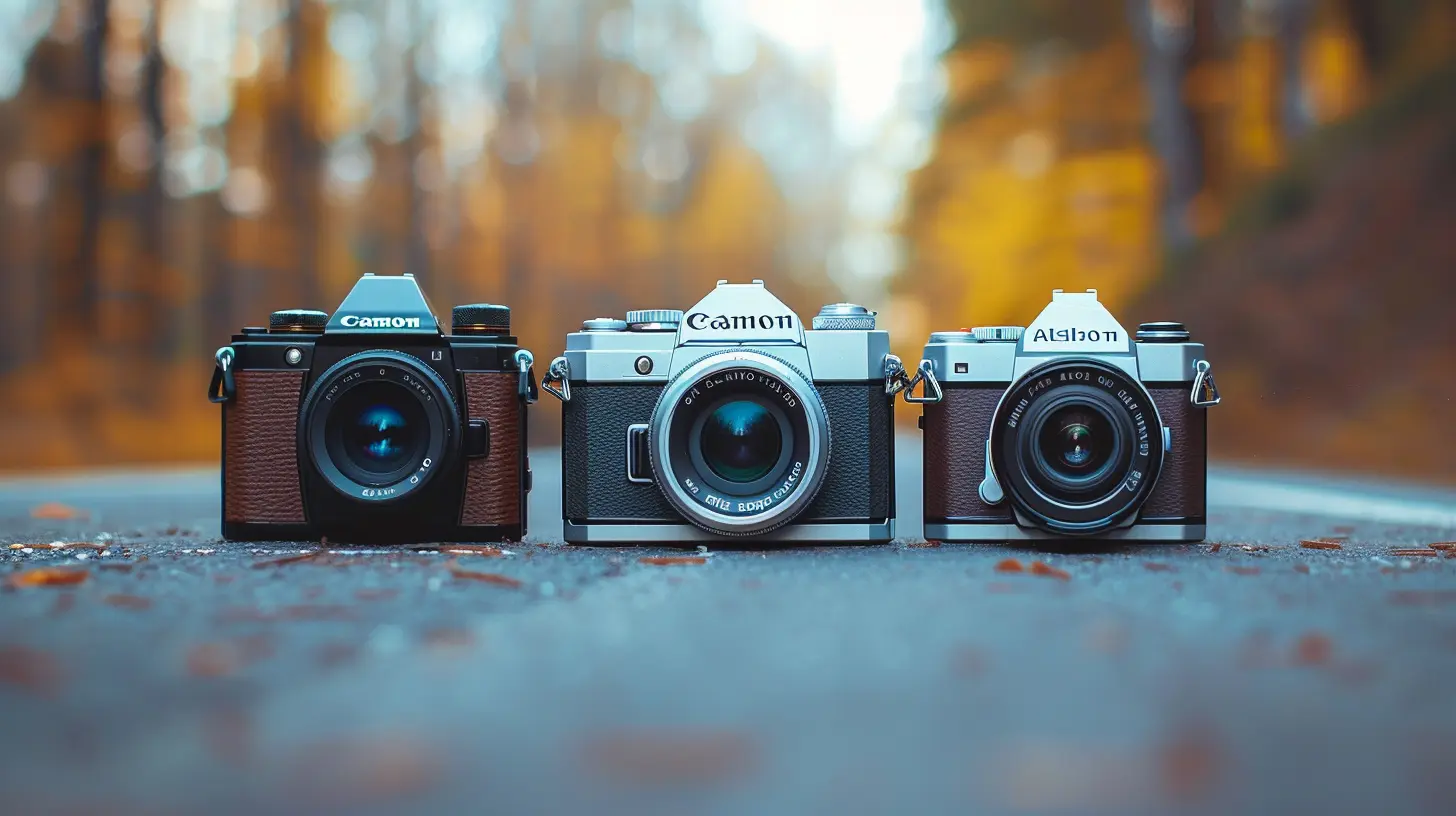
Ah, the good old point-and-shoot. If you were a 90s or early 2000s kid, chances are you had one of these in your backpack for school trips or family vacations. They were simple, easy-to-use, and didn’t require a photography degree to operate.What Made Them Great?
Point-and-shoot cameras lived up to their name. You literally just pointed and clicked. Auto focus? Check. Built-in flash? Check. Portability? Double-check.People loved them because they made photography accessible. You didn’t need to understand ISO, aperture, or shutter speed—you just needed to press a button.
Limitations of Simplicity
But simplicity has its price. These cameras weren’t built for flexibility or professional-level quality. Most had tiny sensors, mediocre low-light performance, and limited manual settings. If you wanted more control or better image clarity, you were out of luck.Still, they were the stepping stones for millions of budding photographers and casual users alike.
The Rise of DSLRs: When Pros Took the Wheel
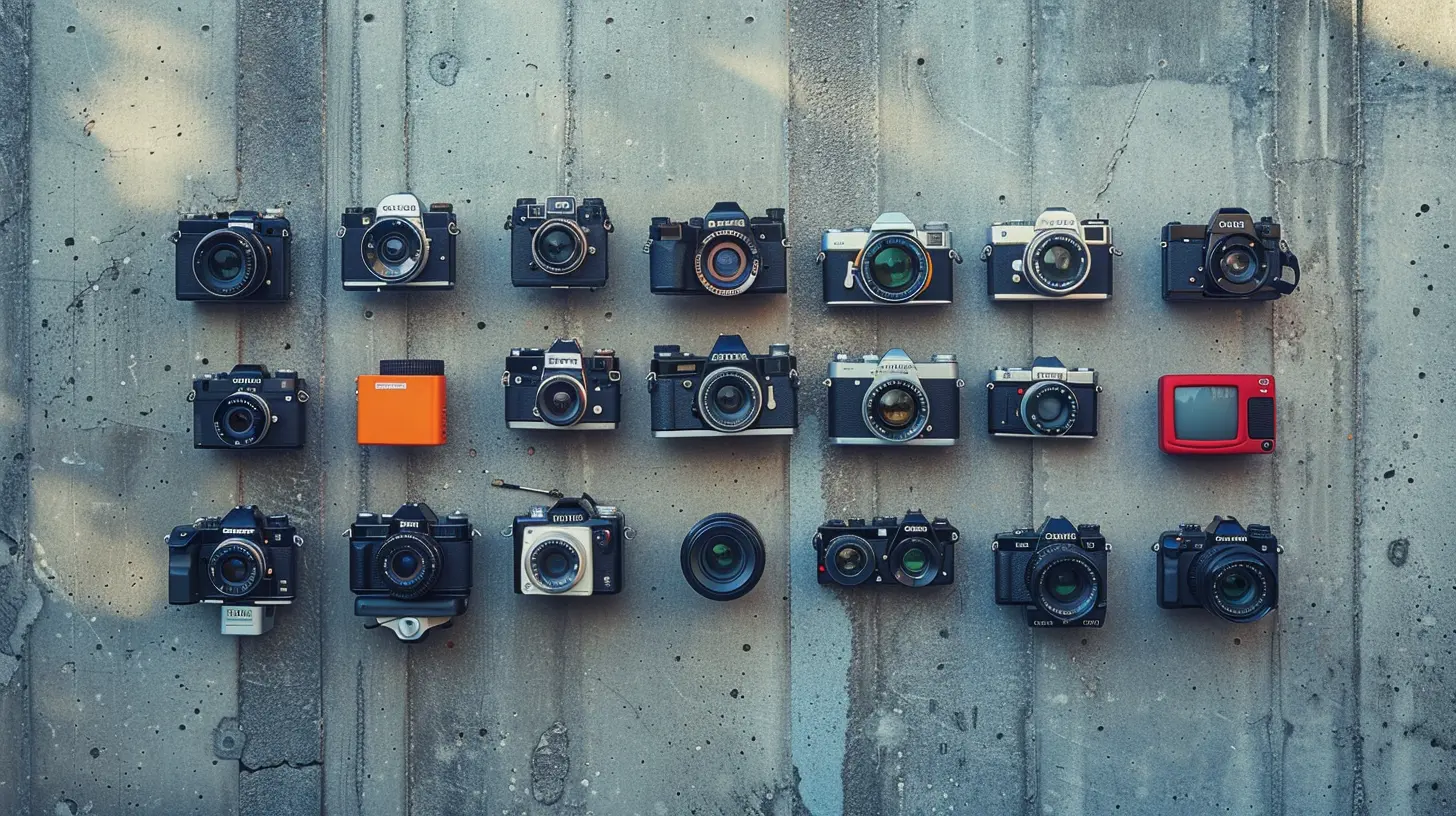
As digital photography matured, so did our expectations. Point-and-shoots were great, but people wanted more. That’s when DSLRs (Digital Single-Lens Reflex cameras) came charging in like knights in shiny armor.More Power, More Control
With DSLRs, the game changed. These cameras allowed interchangeable lenses, manual control over every aspect of an image, and far superior image quality. Suddenly, amateur photographers could start thinking like pros.They offered:
- Larger sensors (which meant better photos, especially in low light),
- Full manual settings (ISO, aperture, shutter speed),
- Professional-level accessories like flashes and tripods,
- And the ability to capture super sharp images.
For the first time, anyone with the drive to learn could harness serious photographic power.
The Catch?
Well, they weren’t exactly compact. Let’s be honest—carrying a DSLR around isn’t always convenient. Plus, there’s the learning curve. DSLRs can be intimidating to newcomers. If you just wanted to snap a quick pic of your lunch, this wasn’t the gear for you.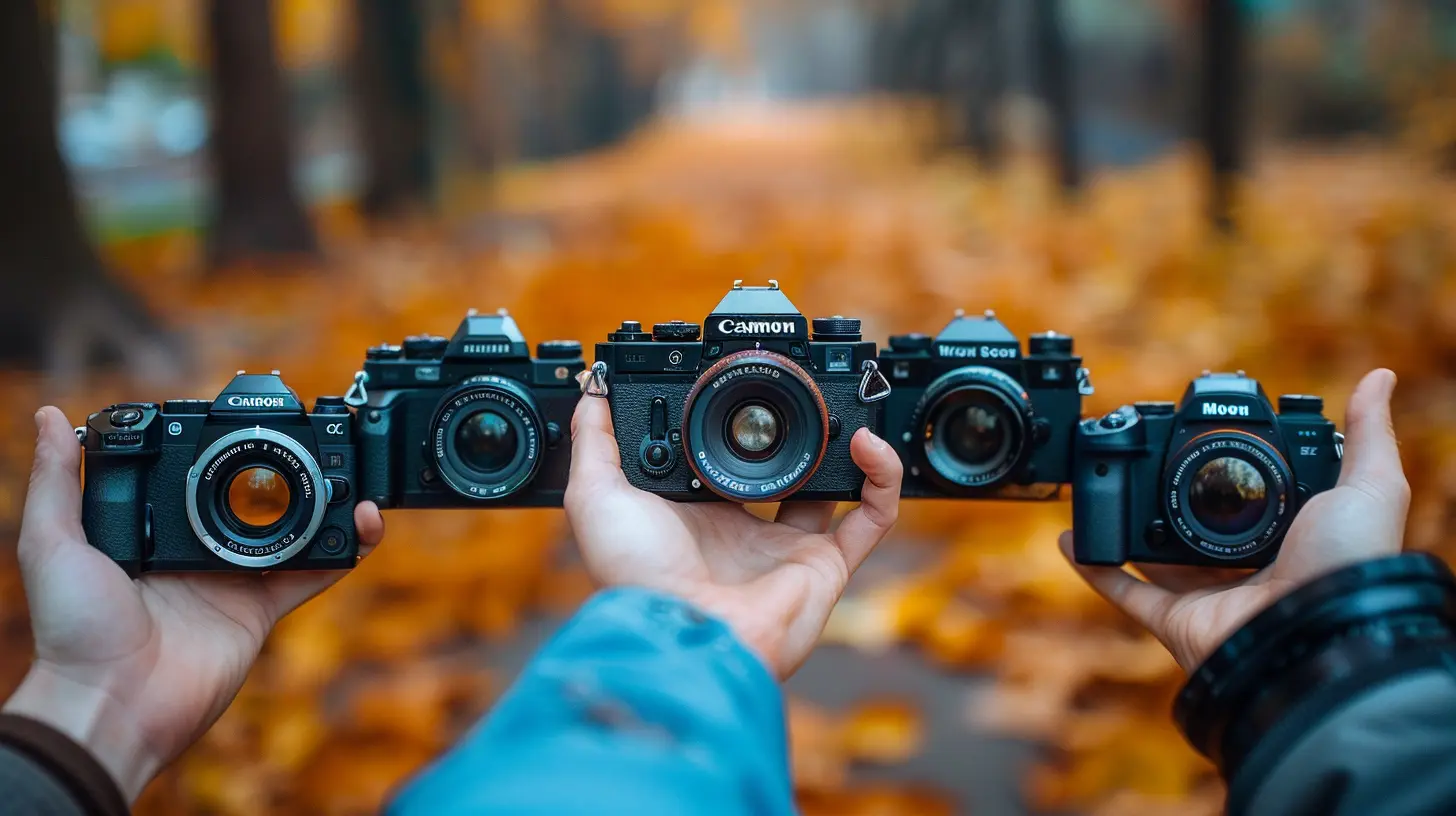
Enter the Mirrorless Cameras: The Best of Both Worlds
Now here’s where things get really interesting. Imagine combining the ease and portability of a point-and-shoot with the power and quality of a DSLR. Sounds like a dream, right? That’s exactly what mirrorless cameras promised—and they’ve more than delivered.What Does “Mirrorless” Even Mean?
The name gives it away. Unlike DSLRs, mirrorless cameras don’t have a mirror mechanism inside. That mirror is what DSLRs use to bounce light from the lens up into the viewfinder. By ditching the mirror, mirrorless cameras could be smaller, lighter, and quicker.And no mirror means fewer moving parts—hello, faster shooting speeds and quieter operation!
Why the Hype?
Mirrorless cameras didn’t just catch up with DSLRs—they started to outshine them in many ways.- Compact Bodies: You can finally get pro-level quality without carrying around a small suitcase.
- Electronic Viewfinders: See your exposure and settings live before you take the shot. No more guessing games.
- Insane Autofocus: Seriously, some mirrorless models can lock on faster than your eye can blink.
- 4K and 8K Video: Mirrorless cameras are dominating the video content scene too.
Add to that the growing ecosystem of high-quality lenses and accessories, and it’s easy to see why mirrorless is leading the charge into the future.
Big Brands Go All-In
In the early days, companies like Sony took big risks on mirrorless technology—and it paid off. Now, traditional DSLR giants like Canon and Nikon have also pivoted hard, releasing cutting-edge mirrorless lines like the EOS R and Z-series.It’s no exaggeration to say mirrorless is not just the future—it’s the now.
Smartphone Cameras: A Disruptor Unlike Any Other
We can’t talk about the evolution of digital cameras without mentioning the elephant in the room: smartphones.Is it even fair to compare them to traditional cameras? Maybe not. But let’s face it—smartphone cameras have stolen the spotlight in many everyday situations.
Why the Shift?
- Convenience: Your phone is always on you. That’s hard to beat.- AI and Software Tricks: Night mode, portrait mode with fake bokeh, HDR… all thanks to computational photography.
- Instant Sharing: Shoot, edit, and upload in under 30 seconds.
This doesn’t mean dedicated cameras are obsolete—but it does mean camera manufacturers have had to raise their game.
Ironically, this mobile photography boom pushed innovation in traditional cameras, leading to features like Wi-Fi connectivity, Bluetooth transfers, and even built-in editing tools.
Comparing the Generations: A Quick Breakdown
| Feature | Point-and-Shoot | DSLR | Mirrorless ||----------------------|-----------------|----------------------|----------------------|
| Size and Portability | ✅✅✅ | ❌ | ✅✅ |
| Image Quality | ✅ | ✅✅✅ | ✅✅✅✅ |
| Beginner Friendly | ✅✅✅ | ❌ | ✅✅ |
| Lens Flexibility | ❌ | ✅✅✅ | ✅✅✅ |
| Future-Proof Tech | ❌ | ✅ | ✅✅✅✅ |
| Video Capabilities | Limited | Moderate | Excellent |
So, Which One’s Right for You?
Honestly, it depends on what you need.- If you just want to snap a few memories without diving into technical stuff, a smartphone or compact point-and-shoot might still be enough.
- Want to go deeper into photography? A DSLR can still be a great choice, especially if you're on a budget, since many older models are dirt cheap now.
- But if you're chasing cutting-edge features, incredible image quality, and a camera that grows with you—mirrorless is where you want to be.
The Future: Where Are We Headed?
Good question. With mirrorless leading the charge and AI creeping into every corner of technology, the future of digital photography looks insane—in the best way.We’re already seeing:
- Advanced AI scene recognition and real-time object tracking.
- In-camera editing tools rivaling mobile apps.
- Camera sensors getting smarter, not just bigger.
- Hybrid models that handle pro photography and top-tier video like a boss.
And who knows what’s next? Maybe holographic imaging or full VR integration? Whatever happens, one thing’s for sure—photography is becoming more accessible and exciting than ever.
Final Thoughts
The evolution of digital cameras—from the humble point-and-shoot to the powerful, compact mirrorless beasts of today—is a story of relentless innovation. It’s about making photography more fun, more flexible, and more empowering for everyone.Whether you're reminiscing about your old Canon Powershot or geeking out over the latest Sony Alpha, there's never been a more thrilling time to be a photo lover.
So dust off that old camera—or go grab a new one—and start capturing the world through your lens. Because one thing’s certain: the best camera is the one you actually use.
all images in this post were generated using AI tools
Category:
Digital CamerasAuthor:

Michael Robinson
Discussion
rate this article
1 comments
Shiloh Black
Digital cameras have transformed photography, empowering everyone to capture moments. The leap from point-and-shoot to mirrorless showcases innovation that changes how we see our world.
July 14, 2026 at 4:57 AM