The Future of China Under Trump 2.0
November 9, 2024 - 19:00
As the political landscape shifts with the prospect of a new Trump administration, China finds itself at a crossroads. The implications of this leadership change extend beyond mere trade discussions and tariffs, prompting a reevaluation of various strategic considerations.

Trade Relations and Tariffs
Chinese business leaders are known for their resourcefulness and adaptability. As tensions between the United States and China continue to escalate, many entrepreneurs in China are exploring innovative methods to navigate the complexities of U.S. tariffs. These strategies may involve adjusting supply chains, seeking alternative markets, or even altering production methods to mitigate the impact of trade barriers.However, while these business strategies are crucial, they represent only one facet of the broader challenges that lie ahead. The potential for trade negotiations to shift dramatically under a new administration raises questions about the long-term stability of these strategies.
Political and Economic Concerns
Beyond trade, Beijing has significant concerns regarding the political climate that may emerge under Trump 2.0. The previous administration's approach often emphasized a confrontational stance towards China, and there is a growing apprehension that similar tactics may continue. This could lead to increased diplomatic tensions and a reevaluation of bilateral relations.Economically, the unpredictability of U.S. policies creates an environment of uncertainty for Chinese businesses and government officials alike. The potential for sanctions, regulatory changes, and shifts in foreign investment flows could have far-reaching implications for China's economic growth and its role in the global market.
Strategic Adjustments
In light of these potential challenges, China may need to adopt a multifaceted approach to its strategy going forward. This includes strengthening partnerships with other countries, enhancing domestic industries, and investing in technological advancements. By diversifying its economic dependencies, China can better position itself to withstand external pressures.Furthermore, fostering innovation within its borders will be essential for maintaining competitive advantages. As the global landscape evolves, China's ability to adapt to new technologies and market demands will play a significant role in its future success.
Conclusion
As China contemplates the future under a second Trump administration, it faces a complex array of challenges that extend beyond trade tariffs. The pursuit of creative solutions in business practices, coupled with strategic political and economic adjustments, will be vital for navigating this uncertain terrain. The coming years will undoubtedly test China's resilience and adaptability in the face of evolving international dynamics.MORE NEWS
August 20, 2026 - 03:19
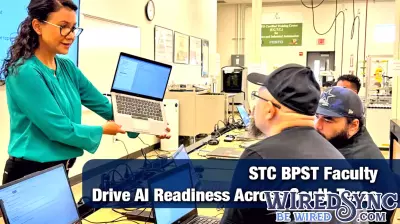
STC’s Business, Public Safety and Technology Faculty Mobilize to Prepare Students for an AI-Driven FutureFaculty across South Texas College`s Division of Business, Public Safety and Technology are joining forces to make sure students do not get left behind as artificial intelligence reshapes the...

August 19, 2026 - 04:25
Integrating Technology in the Classroom Must Be Handled With Caution and PragmatismSchool systems across the country are moving forward with digital learning tools, but the push to modernize classrooms is meeting a wave of caution from educators and administrators. At the 2026...

August 18, 2026 - 09:22
OMSI hosts Portland Festival of Cinema, Animation & Technology this weekA week-long showcase of independent filmmaking and digital innovation kicks off this summer at the Oregon Museum of Science and Industry. The Portland Festival of Cinema, Animation and Technology...

August 17, 2026 - 17:39
CACI Selected to Strengthen and Modernize Technology Architectures for U.S. Space Force GuardiansRESTON, Va., August 17, 2026 - CACI International has secured a new contract with the U.S. Space Force to deliver technology upgrades aimed at defending national interests against emerging...