The Best Smartphones to Watch for in 2026
26 April 2026
Let’s be honest—2025 was a wild ride for smartphones. We saw foldables get thinner, cameras get smarter, and AI start writing our texts for us (which is either a blessing or a creepy nightmare, depending on your mood). But if you think the pace is slowing down, you haven’t been paying attention. The smartphone industry is like a caffeine-fueled marathon runner who just spotted the finish line—it’s sprinting faster than ever.
So, what’s on the horizon for 2026? I’ve been digging through leaks, patents, and industry whispers (and yes, I’ve annoyed a few analysts with my questions) to bring you the most exciting handsets that will likely dominate the conversation next year. Buckle up, because we’re about to talk about phones that might make your current flagship feel like a brick from 2018.
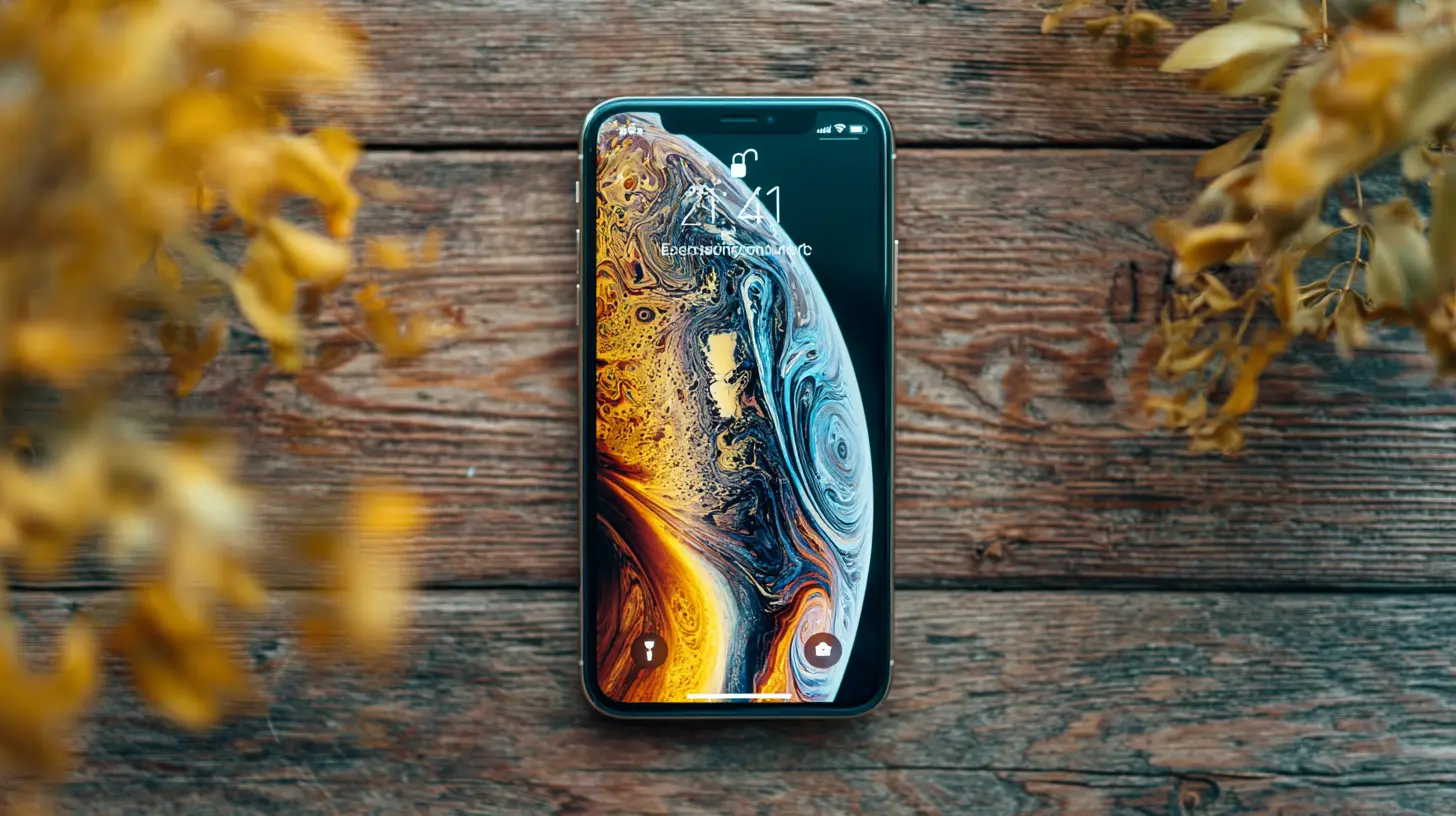
Why 2026 Will Be a Pivotal Year for Smartphones
Before we dive into the specific models, let’s set the stage. Why should you care about 2026? Simple: it’s the year when several long-promised technologies are finally expected to mature.Think of it like a movie trilogy. 2023 was the setup (foldables became mainstream). 2024 was the rising action (AI integration). 2025 was the cliffhanger (battery tech breakthroughs). And 2026? That’s the explosive finale where everything comes together.
We’re talking about solid-state batteries becoming more than just a lab experiment. We’re talking about under-display cameras that actually work without making your selfies look like they were taken through a dirty fishbowl. And we’re talking about AI that doesn’t just answer questions but predicts your needs before you even open your mouth.
If you’re the type of person who upgrades every two years, 2026 might be the year you actually get excited again. Let’s break down the contenders.
1. Samsung Galaxy S26 Ultra: The King Refines His Crown
Samsung’s Ultra line has been the benchmark for Android flagships for years. But let’s be real—the S25 Ultra was a refinement, not a revolution. In 2026, Samsung is expected to go for the jugular.What to Expect
- The Titanium Frame Gets Smarter: Yes, they already used titanium in the S24 Ultra, but leaks suggest the S26 Ultra will feature a new aerospace-grade titanium alloy that’s lighter and stronger. Imagine a phone that feels like a feather but can survive a drop from a second-story window (please don’t test this).- Camera Revolution: The 200MP main sensor is staying, but Samsung is rumored to be working on a variable aperture that shifts from f/1.4 to f/4.0 automatically. Why? Because low-light shots will look like you brought a studio light with you, and daytime photos won’t be washed out.
- The AI Co-Pilot: Samsung’s Galaxy AI is getting a massive upgrade. Think of it as having a personal assistant who knows your schedule, your habits, and your coffee order. It’ll suggest actions before you even think of them. “Hey, you’re running late for your meeting—I’ve already silenced notifications and turned on drive mode.”
The Elephant in the Room: Price
Let’s not kid ourselves—this phone will cost a small fortune. Expect the starting price to hover around $1,399. But if you’re a power user who demands the best, the S26 Ultra will be hard to beat.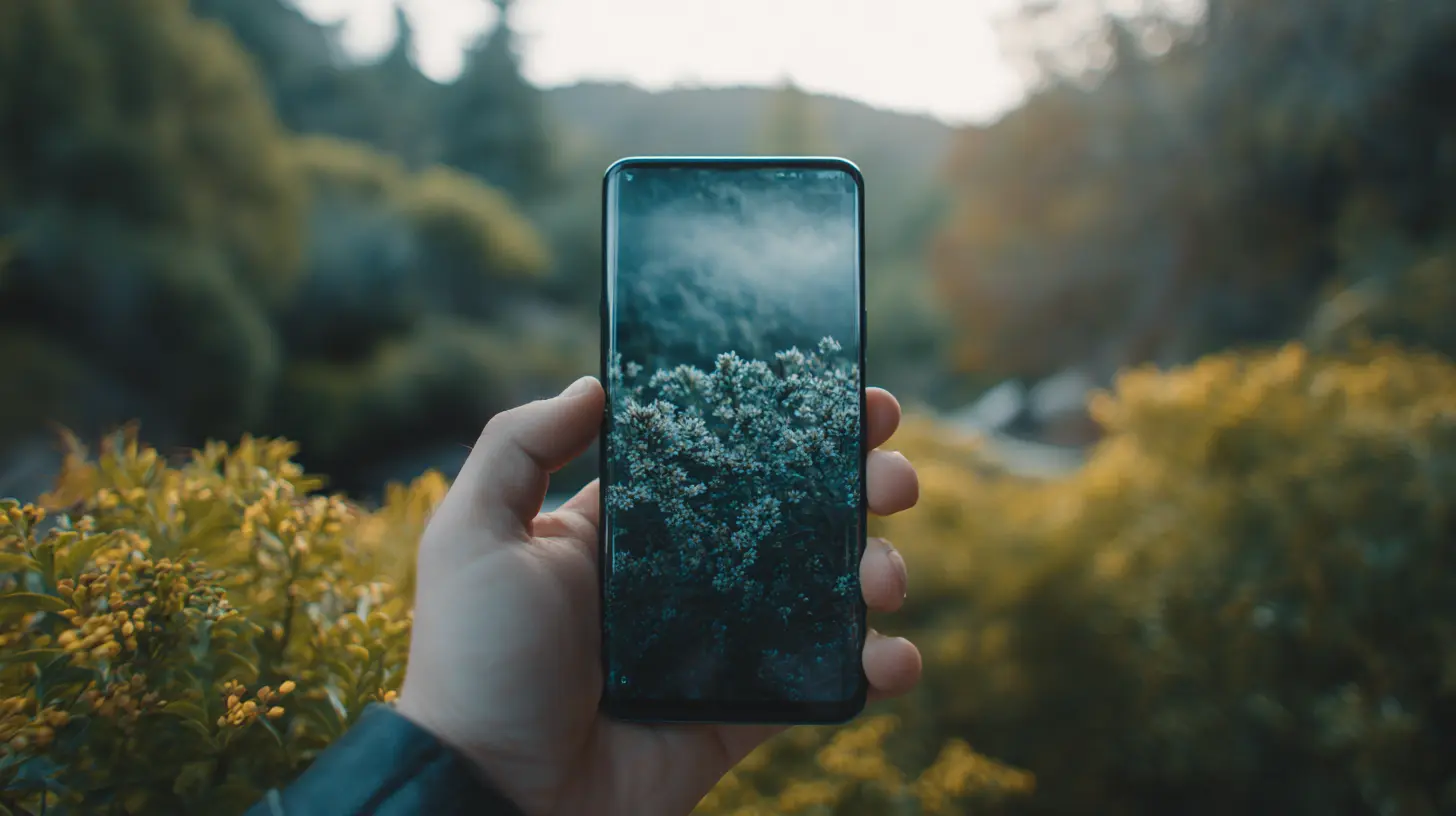
2. Apple iPhone 18 Pro Max: The Cupertino Giant’s Boldest Leap
Apple’s upgrade cycle is predictable, right? New chip, better camera, slightly thinner. But 2026 might be the year Apple surprises us all. Why? Because the iPhone 18 Pro Max is rumored to be the first iPhone to ditch the notch entirely—and I mean entirely.The Under-Display Face ID
Apple has been working on under-display Face ID for years, and 2026 is the target. Imagine a full-screen display with no Dynamic Island, no notch, no punch-hole. Just pure, uninterrupted glass. The TrueDepth camera will be hidden beneath the screen, and early samples suggest it works just as well as current Face ID.The Camera System: Periscope on Steroids
The iPhone 17 Pro Max introduced a 5x optical zoom. The iPhone 18 Pro Max is rumored to jump to 10x optical zoom using a new folded lens system. That means you can zoom in on a bird perched on a tree branch 300 feet away and still see individual feathers.A18 Pro Chip: What’s the Point?
Apple’s chips are already overkill for most users. But the A18 Pro is expected to focus on neural processing power rather than raw speed. Think of it as the difference between a race car and a smart car—the A18 Pro will be optimized for on-device AI tasks, meaning your Siri requests will be processed locally (and faster) without sending data to the cloud.Rhetorical question: Do you really need a phone that can edit 8K video in real-time? Probably not. But you’ll want it anyway.
3. Google Pixel 11 Pro: The AI-First Phone
If there’s one company that understands the marriage of hardware and software, it’s Google. The Pixel line has always been about “smart” over “specs,” and the Pixel 11 Pro will double down on that philosophy.Tensor G6 Chip: The Brain on Steroids
Google’s Tensor chips have been a mixed bag—great for AI, mediocre for raw performance. But the Tensor G6 is expected to bridge that gap. Using a 3nm process and a custom neural architecture, this chip will be able to run complex AI models locally. Think real-time language translation that’s indistinguishable from a human interpreter.The Camera: Computational Photography 2.0
The Pixel’s camera has always been about software magic. In 2026, Google is rumored to introduce “Magic Eraser 2.0” that can remove not just objects but entire backgrounds and replace them with AI-generated scenes. Want a photo of you standing on Mars? The Pixel 11 Pro will do it, and it will look so real you’ll have to check your GPS.A Foldable Pixel? Yes, Please
Rumors are swirling about a Pixel Fold 2 launching alongside the Pixel 11. If it happens, expect a thinner design, a creaseless display, and a price tag that makes you wince (probably $1,799). But for foldable enthusiasts, this could be the one to beat.4. OnePlus 13: The Flagship Killer Returns
OnePlus lost its way for a few years—overpriced phones, confusing product lines, and software that felt bloated. But the OnePlus 12 was a redemption arc. The OnePlus 13? That’s the victory lap.The 100W Charging Standard
While Apple and Samsung are still stuck at 45W charging, OnePlus is rumored to push 100W wired charging as standard. That means a full charge in under 20 minutes. Yes, you read that right. You’ll spend more time looking for an outlet than actually charging.The Display: 144Hz LTPO 5.0
OnePlus has always been about smooth displays, and the 13 will feature a 144Hz LTPO 5.0 panel that dynamically adjusts from 1Hz to 144Hz. Scrolling through Twitter will feel like butter melting on a hot pancake.Hasselblad Partnership Deepens
The camera system on the OnePlus 13 will be co-engineered with Hasselblad, featuring a 1-inch sensor and improved color science. Will it beat the Pixel or iPhone? Probably not. But it’ll come close enough that only pixel-peepers will notice the difference.Price prediction: $899 for the base model. That’s a steal compared to the Ultra or Pro Max.
5. Xiaomi 16 Ultra: The Spec Monster
Xiaomi doesn’t do subtle. They throw every possible spec into a phone and see what sticks. The Xiaomi 16 Ultra is expected to be the most ridiculously overpowered phone of 2026.The 1-Inch Sensor Returns (With a Twist)
Xiaomi already used a 1-inch sensor in the 13 Ultra, but the 16 Ultra will feature a quad-camera setup with four 50MP sensors. Yes, four. That means you’ll have a main camera, an ultrawide, a telephoto, and a periscope zoom—all with the same resolution. No more “the ultrawide is okay but not great” compromises.200W Charging? Insanity
China has already seen 200W charging in some phones, and Xiaomi is rumored to bring it globally. Imagine charging your phone to 100% in 8 minutes. That’s faster than it takes to make a cup of coffee.Global Availability (Finally?)
The catch? Xiaomi phones are often limited to China or require importing. But in 2026, the company is rumored to launch the 16 Ultra in the US and Europe. If that happens, it could shake up the market.6. The Foldable Revolution: Samsung Galaxy Z Fold 7 and Z Flip 7
Foldables are no longer a gimmick—they’re a legitimate category. In 2026, Samsung is expected to make them even more practical.Galaxy Z Fold 7: The Laptop Killer
The Fold 7 will feature a 7.6-inch inner display with under-display camera technology (no more punch-hole). The hinge will be redesigned to be dust-resistant, addressing a major pain point. And the weight? Expected to drop below 250 grams. That’s lighter than some non-foldable flagships.Galaxy Z Flip 7: The Fashion Statement
The Flip 7 will focus on cover display improvements. Expect a 4-inch outer screen that can run full apps without opening the phone. And the crease? Samsung claims it will be 90% less visible than current models.Price: The Fold 7 will likely start at $1,899. The Flip 7? Around $1,099.
7. The Dark Horse: Nothing Phone (3)
Nothing has carved out a quirky niche with transparent designs and glyph interfaces. The Nothing Phone (3) is rumored to be their first true flagship.The Glyph Interface 2.0
The LED strips on the back will become interactive touch panels. You’ll be able to control music, answer calls, or even play simple games without touching the screen. It’s weird, it’s fun, and it’s uniquely Nothing.Mid-Range Pricing, Flagship Specs
Expect a Snapdragon 8 Gen 4 chip, a 50MP triple camera, and a 120Hz OLED display—all for under $700. If Nothing can deliver on software updates (their Achilles’ heel), this could be the best value phone of 2026.What About Battery Life? The Solid-State Promise
I’ve mentioned charging speeds, but let’s talk about battery life. 2026 is the year we might finally see solid-state batteries in consumer phones. These batteries use a solid electrolyte instead of a liquid one, which means:- Higher energy density (more capacity in the same size)
- Faster charging (theoretically 5-minute full charges)
- Safer (no risk of thermal runaway)
Samsung and Toyota have both shown working prototypes. If even one major phone adopts this in 2026, it’s game over for battery anxiety.
Metaphor time: Current lithium-ion batteries are like a leaky bucket—they work, but they’re inefficient. Solid-state batteries are like a sealed vault—everything stays inside, and nothing goes to waste.
The Price of Progress: Will We Pay More?
Let’s address the elephant in the room: prices are going up. The iPhone 18 Pro Max could hit $1,599. The Samsung Galaxy S26 Ultra might breach $1,499. And foldables? Don’t even get me started.But here’s the thing—you don’t have to buy the most expensive model. The standard iPhone 18, the Galaxy S26, and the Pixel 11 will still be incredible phones. They’ll have 90% of the features for 60% of the price.
Rhetorical question: Do you really need a periscope zoom lens for your Instagram selfies? Probably not. But if you’re a photographer, a traveler, or just someone who loves tech, 2026 will be a fantastic year to splurge.
Final Thoughts: Which One Should You Buy?
If you’re the type who upgrades every 3-4 years, wait for the Samsung Galaxy S26 Ultra or iPhone 18 Pro Max. They’ll be the most future-proof options.If you want the best value, go for the OnePlus 13 or Nothing Phone (3). They’ll give you flagship performance without the flagship price.
And if you’re a foldable fanatic? The Galaxy Z Fold 7 is the one to watch.
But honestly, the best smartphone to watch for in 2026 isn’t about specs—it’s about how these devices will integrate into our lives. They’ll be smarter, faster, and more intuitive. They’ll anticipate our needs, protect our privacy, and maybe even make us smile.
So, which one are you most excited about? Drop a comment below—I’d love to hear your thoughts.
all images in this post were generated using AI tools
Category:
Technology ReviewsAuthor:

Michael Robinson
Discussion
rate this article
2 comments
Phaedra Cross
Great roundup! It's exciting to see how quickly innovation is moving. This list makes the wait for 2026 feel a little easier, knowing such powerful and creative options are on the horizon. Thanks for the glimpse ahead
April 30, 2026 at 4:04 AM
Michael Robinson
Thanks for your thoughts! I'm glad you found the roundup helpful. Exciting times ahead for smartphones!
Rocket McMichael
As the digital horizon unfolds, whispers of breakthrough technology beckon. What secrets lie within the smartphones of 2026? Explore the innovations that promise to redefine how we connect, communicate, and experience the world.
April 28, 2026 at 3:09 AM
Michael Robinson
Exciting times ahead! The smartphones of 2026 are set to change everything, from connectivity to our daily experiences. I can't wait to dive into these innovations.