4 Technologies Chasing Quantum Computing Supremacy and the Stocks to Invest In With Each
June 17, 2026 - 18:32

The race to build a practical quantum computer is not a single contest but several parallel ones. Researchers are pursuing at least four distinct physical technologies to create stable qubits, the basic units of quantum information. Each approach has its own engineering challenges and potential advantages, and investors are placing bets on which will ultimately deliver "quantum supremacy" -- the point where a quantum machine outperforms the best classical supercomputers on a specific task.
One leading method uses superconducting circuits, which are tiny loops of metal cooled to near absolute zero. These circuits behave like artificial atoms and can hold quantum states for short periods. Companies like Google and IBM have invested heavily in this path, building processors with dozens of superconducting qubits. A second approach traps individual ions, or charged atoms, in electromagnetic fields and manipulates them with lasers. Ion traps offer longer coherence times, meaning the qubits stay stable longer, but scaling them to hundreds or thousands of qubits is difficult. Honeywell and IonQ are key players here.
A third technology relies on photonics, using particles of light as qubits. Photons travel fast and don't interact much with their environment, which reduces errors. However, creating reliable photon-photon interactions is a major hurdle. PsiQuantum, a private company, is pursuing this approach. Finally, there are topological qubits, which store information in the braiding patterns of quasiparticles. This method is theoretically more resistant to noise but remains largely experimental. Microsoft is the most prominent backer of topological quantum computing.
Each of these technologies is at a different stage of maturity, and none has yet produced a machine that can solve real-world problems faster than a classical computer. The stocks associated with these efforts range from established tech giants to smaller, specialized firms. For investors, the challenge is not just picking the winning technology but also accepting that the timeline for a truly useful quantum computer may still be years or even decades away.
MORE NEWS

August 2, 2026 - 00:32
Honda has a new partner for the advancement of solid-state battery technologyHonda is making a serious move in the electric vehicle race by joining forces with QuantumScape, a company known for its work on next-generation battery tech. The two firms have signed a deal to...
August 1, 2026 - 01:45
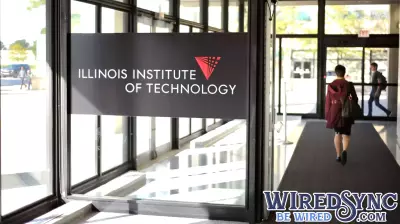
Illinois Institute of Technology cuts 160 faculty and staff just before fall semesterThe Illinois Institute of Technology has eliminated 160 faculty and staff positions just days before the start of the fall semester. University administrators say the cuts are a direct response to...

July 31, 2026 - 03:17
World Wide Technology Raceway, Local Shelters Partner for Third Annual Animal Adoption PromotionMADISON, Ill. (July 30, 2026) - World Wide Technology Raceway is partnering with the Humane Society of Missouri and Helping Strays of Monroe County this August to help shelter dogs find permanent...

July 30, 2026 - 05:22
Is Spotify Technology (SPOT) Fully Valued Going Into Earnings?Investor attention on Spotify Technology (SPOT) has picked up ahead of its upcoming quarterly earnings report expected on August 4, as traders weigh potential surprises against current expectations...