WFP Launches Second Edition of Humanitarian Innovation Accelerator with $150,000 Funding
March 31, 2025 - 03:03

The World Food Programme (WFP) is excited to announce the launch of the second edition of its Humanitarian Innovation Accelerator, aimed at identifying and supporting innovative, technology-driven solutions that address pressing humanitarian challenges. This initiative is designed to empower innovators and organizations that are making a significant impact in the humanitarian sector.
Participants in the accelerator will have the opportunity to receive up to $150,000 in funding to develop and scale their solutions. This funding will support projects that leverage technology to improve the delivery of aid, enhance food security, and foster resilience in vulnerable communities around the world.
The program is specifically looking for proven innovations that have demonstrated effectiveness in real-world settings. By providing financial support and mentorship, WFP aims to facilitate the growth of these solutions, ultimately benefiting those most in need. Interested applicants are encouraged to apply and showcase their transformative ideas that can revolutionize humanitarian efforts.
MORE NEWS
August 20, 2026 - 03:19
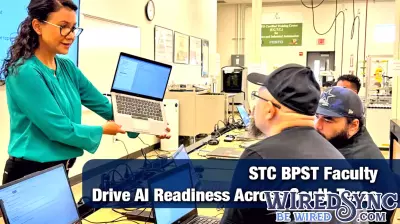
STC’s Business, Public Safety and Technology Faculty Mobilize to Prepare Students for an AI-Driven FutureFaculty across South Texas College`s Division of Business, Public Safety and Technology are joining forces to make sure students do not get left behind as artificial intelligence reshapes the...

August 19, 2026 - 04:25
Integrating Technology in the Classroom Must Be Handled With Caution and PragmatismSchool systems across the country are moving forward with digital learning tools, but the push to modernize classrooms is meeting a wave of caution from educators and administrators. At the 2026...

August 18, 2026 - 09:22
OMSI hosts Portland Festival of Cinema, Animation & Technology this weekA week-long showcase of independent filmmaking and digital innovation kicks off this summer at the Oregon Museum of Science and Industry. The Portland Festival of Cinema, Animation and Technology...
August 17, 2026 - 17:39
CACI Selected to Strengthen and Modernize Technology Architectures for U.S. Space Force GuardiansRESTON, Va., August 17, 2026 - CACI International has secured a new contract with the U.S. Space Force to deliver technology upgrades aimed at defending national interests against emerging...